
Rock Wool vs. Aerogel Blankets: Picking the Right Insulation for Your Petrochemical Pipelines
Published: 2025-12-20
| Updated: 2026-03-17
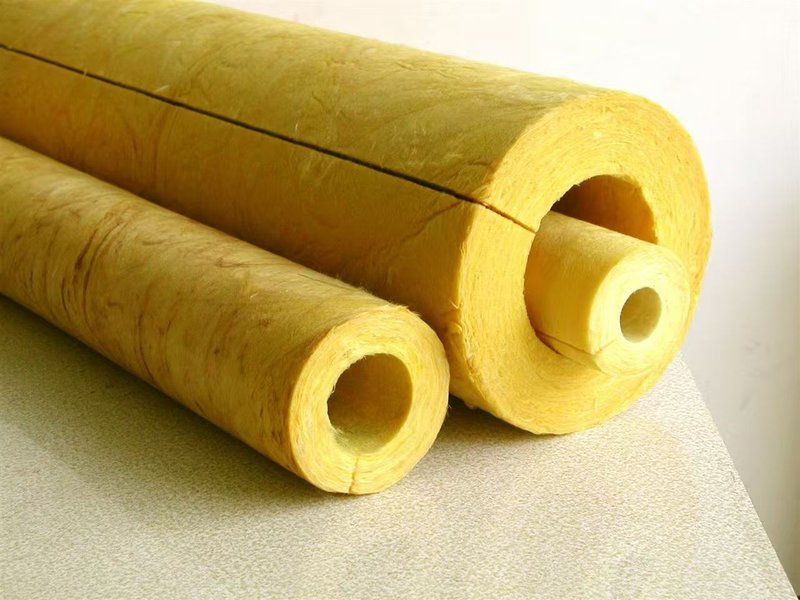
Rock Wool Insulation Pipe
From our Hebei shipments to Gujarat refineries, we've helped clients choose between rock wool's fireproof bulk and aerogel's slim efficiency. This breakdown covers thermal performance, installation ease, and costs in real pipeline scenarios, with tips from field feedback to cut energy waste.
Dealing with insulation choices for petrochemical lines isn't new to me—over the years supplying from our Hebei base, I've fielded calls from managers debating rock wool's tried-and-true reliability against aerogel blankets' modern edge. Both have their spots, but in tight spaces or extreme heats, the differences show fast. Take a Gujarat refinery project we supplied: rock wool worked for broad fire barriers, but aerogel shaved thickness without losing punch. Here's how they stack up, pulled from actual installs and lab data.
On thermal chops: Rock wool clocks in at 0.035-0.045 W/m·K conductivity, solid for steady heat block in pipes up to 650°C. Aerogel dips to 0.013-0.018 W/m·K, meaning you need half the thickness for the same R-value—handy when space is premium around valves or bends. In one Australian oil setup we heard about, aerogel's low profile cut heat loss 40%, per energy audits, while rock wool needed extra layers.
Fire and durability: Rock wool wins big on non-combustibility (A1 rating, melts at 1000°C+), ideal for fire-prone refineries. Glass wool variant adds sound dampening too. Aerogel holds A1 as well in silica forms but stays lighter and hydrophobic—resists moisture that can corrode under rock wool if not sealed right. Feedback from a Middle East pipe run showed aerogel lasting longer in humid spots, dodging CUI issues flagged in NACE reports.
Install and cost: Rock wool's easier to source cheap and cut on-site, but bulkier to wrap—takes more time on curves. Aerogel's flexible, rolls out quick with less overlap needed, though pricier upfront (2x rock wool per meter). Payback? In high-energy loss lines, aerogel recoups in 1-2 years via savings, like a European retro we tracked cutting bills 30% (DOE case studies). For budget jobs, rock wool's your starter; for efficiency pushes, aerogel upgrades.
Bottom line: If fire's your main worry and space isn't tight, rock wool holds. But for slim, high-performance needs in petrochem, aerogel's been a game-changer for our partners. What's tipped the scale in your projects? Share if you've switched materials lately.
Sources: ASTM C518 (Conductivity Testing); NACE SP0198 (Corrosion Under Insulation); U.S. Department of Energy Industrial Efficiency Reports.
Contact Us: Hebei Woqin Trade Co., Ltd.
- Phone/WhatsApp: +86 13933929092
- Email: an@cn-aerogel.com
- Website: www.insulatewool.com

Written by - Ruibin An
Founder & Managing Director
Industry Veteran with 13+ Years of Experience. Deeply rooted in the insulation industry for over 13 years, specializing in supply chain optimization and global market trends for Rock Wool and Aerogel materials.
Related Insulation Solutions
LATEST NEWS
District Cooling in the Gulf: The Physics of Inevitable Condensation and How Pre-Formed Glass Wool Shells Stop It
2026-06-12
CCGT Power Plant Pipe Insulation English Marketing Copy (99-point Final Benchmark Version)
2026-06-10
Locking in 600°C: Composite Shells for CSP Molten Salt Pipelines in the GCC
2026-06-10
Blocking 55°C Desert Sun: Glass Wool Shells for Mega Water Transmission
2026-06-10
Stop the $18M Steam Pipe Burst: Dual-Defense Insulation That Survives C5-M
2026-06-04