
Locking in 600°C: Composite Shells for CSP Molten Salt Pipelines in the GCC
Woqin dual-layer composite shells deliver reliable 600°C thermal protection, preventing heat loss and molten salt solidification for GCC CSP molten salt pipelines.
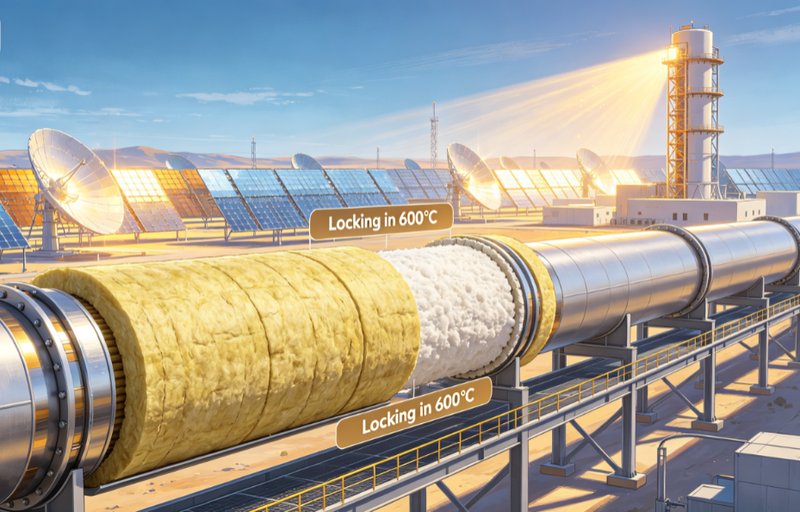
600°C Extreme Thermal Challenges for CSP Molten Salt Pipelines Under Vision 2030
Booming under Saudi Vision 2030 and landmark developments including NEOM City and Dubai Maktoum Solar Park, Concentrated Solar Power (CSP) has become the core of GCC sustainable energy transformation. Different from conventional power facilities, CSP relies on high-temperature molten salt circulation and all-day thermal storage to realize 24-hour power generation. Molten salt pipelines enduring continuous 400–600°C extreme heat pose rigorous, uncompromising requirements for insulation safety and structural stability.
These ultra-high-temperature pipelines face three inherent operational challenges that ordinary insulation systems cannot resolve. First, sustained extreme heat creates constant thermal stress, requiring materials with exceptional high-temperature structural stability. Second, frequent temperature fluctuations during daily startup and shutdown generate powerful thermal shocks, accelerating material fatigue and degradation. Third, molten salt features an ultra-low temperature tolerance; minor heat dissipation and temperature drop will compromise fluidity, endangering the entire energy storage cycle. For national-level renewable energy projects, unstable pipeline thermal protection doesn’t just threaten consistency — it risks a single point of failure that can freeze an entire molten salt loop into an irrecoverable solid plug, wiping out baseload power generation in one shift.
Critical Insulation Failures: Sagging Structures and Compromised Energy Storage Stability
Most GCC CSP projects still adopt outdated single-layer insulation solutions, which are not designed for sustained 600°C ultra-high temperature operation. These conventional materials have inherent structural and performance defects, which will inevitably fail during long-term service, triggering a series of cascading engineering, economic and professional risks for EPC teams and project owners.
Conventional single-layer rock wool is the most widely used but problematic option. Under prolonged extreme heat, standard rock wool softens and sags like melted butter, gradually shrinking, deforming, and collapsing to form continuous hollow cavities across the insulation layer. These structural defects create unblockable thermal bridges that trigger brutal, uncontrolled heat dissipation. Sustained heat loss makes pipeline temperature plummet rapidly. Once temperature drops below the critical threshold, molten salt solidifies into a massive, unflushable solid salt plug inside the pipeline. This is a non-repairable engineering fatality: it fully paralyzes nighttime power generation, requires pipeline demolition and complete salt cleaning, and incurs astronomical reconstruction and downtime losses.
A common makeshift alternative adopted on construction sites is single-layer alumino-silicate blankets fixed with iron wires. Though featuring high-temperature resistance, this solution lacks rigid structural support. Flexible blanket materials cannot maintain stable shape under thermal cycling, gradually drooping, loosening, and failing within months. Uneven splicing gaps cause persistent heat leakage, making it entirely unsuitable for long-term CSP operational requirements. For EPC contractors and technical decision-makers, adopting this temporary shortcut is a high-stakes gamble — it risks project delay penalties, costly rework, and permanent disqualification from future GCC mega renewable energy projects.
Both traditional single-layer solutions share fatal defects: insufficient thermal shock resistance, poor structural rigidity at ultra-high temperatures, and unavoidable thermal bridge loss. For technical directors, improper material selection leaves a permanent risky record in project files and damages professional reputation in the Middle East CSP industry. For project owners and GCC regulatory departments, unstable insulation performance leads to substandard energy storage efficiency, failing core Vision 2030 and NEOM project performance benchmarks. Over time, these hidden dangers translate into frequent maintenance, soaring operational costs, underperforming power output, and irreversible project and professional losses.
Woqin Composite Shell Solution: Dual-Layer Structure for 600°C Zero-Failure Thermal Lock
To completely resolve the structural instability and heat loss pain points of traditional CSP pipeline insulation, Woqin launches a custom alumino-silicate + rock wool composite pipe shell system, exclusively engineered for 400–600°C molten salt pipeline working conditions. The dual-layer structure achieves role-based thermal protection and structural support, thoroughly eliminating the root causes of conventional insulation failure.
Inner Layer: 1260°C Alumino-Silicate Needle Mat — Thermal Shock Buffer
The high-temperature resistant inner layer withstands instantaneous thermal shocks and drastic temperature fluctuations during unit startup and shutdown. It absorbs extreme thermal stress and prevents material fatigue cracking, perfectly solving the problem of rapid aging and loose failure caused by frequent heat cycling in traditional single-layer insulation. This layer ensures stable thermal isolation even under variable operating conditions.
Outer Layer: High-Rigidity Rock Wool Shell — Structural Anti-Sagging Support
The outer rigid rock wool shell features a heat shrinkage onset temperature ≥ 600°C, providing permanent structural rigidity for the entire insulation system. Different from ordinary rock wool that softens and collapses at high temperatures, our customized outer shell maintains complete structural integrity under long-term 600°C steady-state operation. It completely avoids cavity deformation and thermal bridge formation, resolving the core defect of traditional insulation sagging and heat leakage.
Compared with makeshift wire-fixed blanket solutions, Woqin’s integrally prefabricated composite shell requires no on-site wire binding. The tightly bonded dual-layer structure delivers stable mechanical strength and long-term shape retention, eliminating mid-term droop failure and repeated maintenance problems. This dual-system collaboration achieves reliable ultra-high temperature thermal locking and stable long-term operation for CSP molten salt pipelines.
Zero Thermal Bridge Staggered Joint Design: Minimize Round-the-Clock Thermal Storage Loss
The core commercial value of CSP stations lies in daytime heat collection and nighttime power generation, where long-duration heat retention directly determines power generation output and project economic benefits. Traditional insulation adopts aligned joint installation, leaving linear penetrating gaps that become fixed thermal leakage channels and continuously consume stored thermal energy during overnight insulation.
Woqin composite shells adopt a professional staggered joint assembly process. The upper and lower layers and adjacent pipe shell joints are completely staggered, physically cutting off all penetrating thermal bridges. This seamless enclosure structure minimizes overall pipeline heat loss and maintains stable molten salt temperature for 24-hour continuous operation.
Every eliminated thermal bridge reduces invalid heat dissipation and converts reserved thermal energy into effective nighttime power output. This precision thermal control steadily improves energy storage utilization, helps GCC CSP projects fully meet designed power generation indicators, and delivers verified, stable energy output that keeps NEOM-scale landmark projects strictly compliant with national Vision 2030 performance benchmarks. For project owners, this thermal precision means every percentage point of storage efficiency gained is directly converted into bankable, on-peak nighttime power purchase agreement revenue — with zero risk of liquidated damages from generation shortfall. It provides solid performance guarantee for the stable implementation of regional renewable energy strategic goals.
Request Professional CSP Insulation Technical Resources
Ultra-high temperature molten salt pipeline insulation determines the long-term operational stability and economic performance of your CSP energy storage system. A reliable thermal protection solution avoids inefficient heat loss, frequent maintenance, and unstable power generation risks for your new energy projects.
Get In Touch For Professional CSP Insulation Support
If you have ongoing or upcoming CSP molten salt pipeline projects in the GCC region, reach out to our professional engineering team. We provide tailored 600°C ultra-high temperature insulation solutions, technical verification support and project-matched guidance for Middle East renewable energy infrastructure.
Brand Introduction
Hebei Woqin is a professional engineering-grade thermal insulation solution provider focusing on Middle East high-temperature renewable energy infrastructure. Our pipe insulation products comply with international industry standards and are optimized for extreme 400–600°C CSP molten salt operating conditions. With rich practical experience serving GCC new energy projects, we provide full-cycle customized solution design, complete technical documentation, and professional on-site engineering support for CSP EPC contractors and renewable energy project owners across the region.
Phone/WhatsApp: +86 13933929092
Email: an@cn-aerogel.com
Official Website: insulatewool.com

Written by - Ruibin An
Industry Veteran with 13+ Years of Experience. Deeply rooted in the insulation industry for over 13 years, specializing in supply chain optimization and global market trends for Rock Wool and Aerogel materials.
LATEST NEWS
CCGT Power Plant Pipe Insulation English Marketing Copy (99-point Final Benchmark Version)
2026-06-10
Locking in 600°C: Composite Shells for CSP Molten Salt Pipelines in the GCC
2026-06-10
Blocking 55°C Desert Sun: Glass Wool Shells for Mega Water Transmission
2026-06-10
Stop the $18M Steam Pipe Burst: Dual-Defense Insulation That Survives C5-M
2026-06-04
Desert Node Armor: Crush-Resistant Pipe Shells for Cross-Country Pipelines
2026-06-03