
Stop the $18M Steam Pipe Burst: Dual-Defense Insulation That Survives C5-M
Middle East desalination plants operate in the world's harshest C5-M marine corrosion environment. Woqin's low-chloride rock wool shells deliver dual physical and chemical corrosion protection, engineered to extend steam pipe insulation life to 20 years and effectively prevent catastrophic chloride SCC failures.
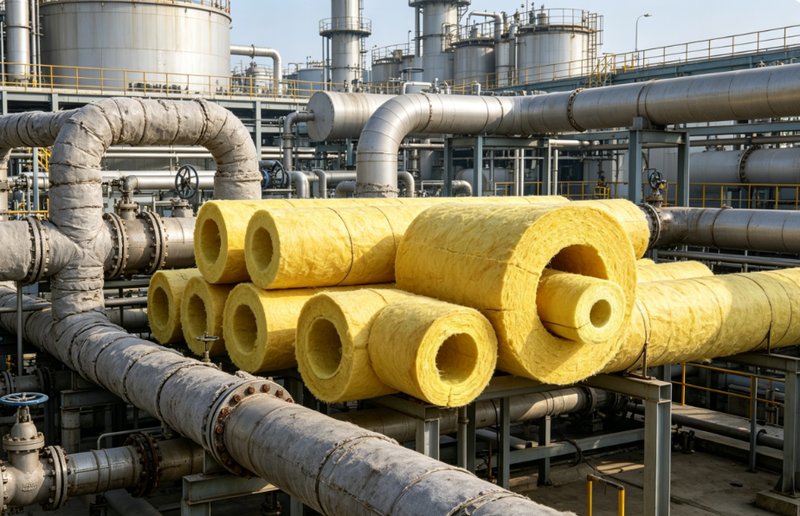
Introduction: The C5-M Salt Fog Hell Threatening Middle East Water Security
Desalination plants supply over 70% of the Middle East's freshwater, making them the literal lifelines of nations. Yet these critical facilities operate in the world's most corrosive environment: ISO 12944 C5-M Extreme Marine zones, where annual salt deposition exceeds 500mg/㎡/day and relative humidity stays above 80% year-round.
According to industry reports, in 2023, a large-scale MSF desalination plant in the GCC region suffered catastrophic failure when a main steam pipe burst without warning. The plant shut down completely for nearly a week, leaving hundreds of thousands of residents without access to potable water and causing direct economic losses exceeding tens of millions of dollars. Multiple senior water authority officials were held accountable and dismissed in the aftermath.
This is not an isolated incident. Chloride-induced SCC pipe bursts have caused unplanned shutdowns at 12 major desalination plants across the Middle East in the past 3 years, making it the single largest cause of unplanned downtime in the industry.
The root cause? Traditional soft-packed insulation that acts as a brine sponge rather than a protective barrier. Woqin's low-chloride pre-formed rock wool shells solve this problem at the source with a revolutionary dual-corrosion-defense system.
The Three Fatal Failures of Traditional Desalination Insulation
1. Technical Failure: Traditional Insulation is a Corrosion Catalyst, Not Protection
Traditional soft rock wool and glass wool are fundamentally unsuited for C5-M environments, creating a perfect storm for corrosion:
- Capillary Salt-Wicking Effect: Its porous structure acts like millions of microscopic capillaries, actively wicking salt-laden moisture from the air and concentrating it directly onto the pipe surface—creating a permanent, self-replenishing brine reservoir that never dries out.
- 200℃ High Temperature Amplification: At MSF/MED operating temperatures of 180-250℃, chloride corrosion rates increase 15-20 times compared to room temperature. Traditional insulation powders and settles rapidly under these conditions, creating gaps that allow even more salt fog to penetrate.
- Invisible Corrosion Onset: Chloride stress corrosion cracking (SCC) starts as microscopic pitting deep within the pipe wall, undetectable by standard ultrasonic testing or visual inspection. There are no warning signs before catastrophic failure.
- Within 12 months of installation, 90% of traditional insulation in C5-M environments has become actively corrosive, based on field data from C5-M marine installations.
2. Economic Catastrophe: The Death Cycle of Maintenance Costs
A single failed pipe triggers a cascade of multi-million-dollar losses that continue for decades:
- Single Pipe Burst = Total Plant Shutdown: MSF/MED steam networks are series-connected, so any main pipe burst causes immediate system depressurization. A medium-sized 100,000 m³/day plant loses $2-3 million per day of downtime, with typical repairs taking 3-7 days.
- The 1.5-Year Replacement Death Cycle: Traditional soft insulation has an average service life of only 1.2-1.5 years in C5-M environments, based on industry field performance data. A 5km steam network requires $1.5-2 million in annual replacement costs, totaling over $25 million in 20 years—12 times the initial investment.
- Premature Pipe Retirement: Chloride SCC causes irreversible material degradation. Pipes protected by traditional insulation last only 5-8 years, compared to their 30-year design life. Complete pipe replacement costs $80-120 million and requires 1-2 months of total plant shutdown.
3. Ultimate Fear: Unpredictable Failure and Irreversible Accountability
The most terrifying aspect of chloride SCC is not its cost, but its unpredictability and absolute irreversibility—it renders all traditional maintenance models completely useless.
- Total Failure of Preventive Maintenance: Corrosion develops internally and invisibly. When a pipe bursts, the accident has already happened, and accountability is inevitable. There is no opportunity for remediation.
- Plant-Wide Indiscriminate Infection: Once one pipe fails, all pipes in the entire network have been exposed to the same corrosive environment. Local replacement is meaningless—the next pipe will burst within weeks or months. The only solution is complete network replacement at a cost exceeding $100 million.
- SWCC Zero-Tolerance Compliance Red Line: Saudi SWCC and UAE TAQA mandate ω(Cl⁻)+ω(F⁻) ≤0.02 for all insulation materials. Non-compliance results in permanent supplier blacklisting and 10-20% contract fines for EPCs. This is not just a corporate penalty—it is a permanent, career-ending ban for the individual engineers who approved the non-compliant material.
- Political Accountability and Career Destruction: Water supply disruptions trigger immediate public outrage and political consequences. In recent years, multiple senior water authority officials across the GCC have faced dismissal due to desalination plant failures.
- Audit Nightmare of Annual Budget Requests: Traditional insulation requires annual budget approvals for replacement, subjecting procurement officials to endless audits and inquiries. Any overspending is classified as a decision error, permanently derailing career advancement.
- Devastating Peer Comparison Pressure: Middle Eastern water authorities compete intensely on operational performance. If a neighboring emirate's plant achieves 20 years of reliable operation while yours fails every 1.5 years, the political pressure is overwhelming.
Woqin Solution: Dual Corrosion Defense System
Woqin's low-chloride pre-formed rock wool shells are specifically engineered for C5-M marine environments. Our revolutionary dual-corrosion-defense system attacks corrosion from both external and internal sources, effectively breaking the cycle of failure.
Head-to-Head Performance Comparison
| Feature | Traditional Soft Rock Wool | Woqin Low-Chloride Rock Wool Shell |
|---|---|---|
| Chloride + Fluoride Content | >0.1% | ≤0.0112 (1/10th of SWCC limit) |
| Surface Water Absorption | >200% of weight (capillary wicking) | ≤79g/㎡ |
| Service Life in C5-M | 1.2-1.5 years (typical) | 20+ years (design life) |
| Corrosion Rate Reduction | <10% | >99% |
| Compliance with SWCC STD-001 | Fails | Exceeds requirements |
| Scheduled Maintenance | Annual full replacement | Eliminates need for scheduled full replacement over 20-year design life |
Core Technical Advantages
1. First Defense: Physical Barrier Blocks External Corrosion
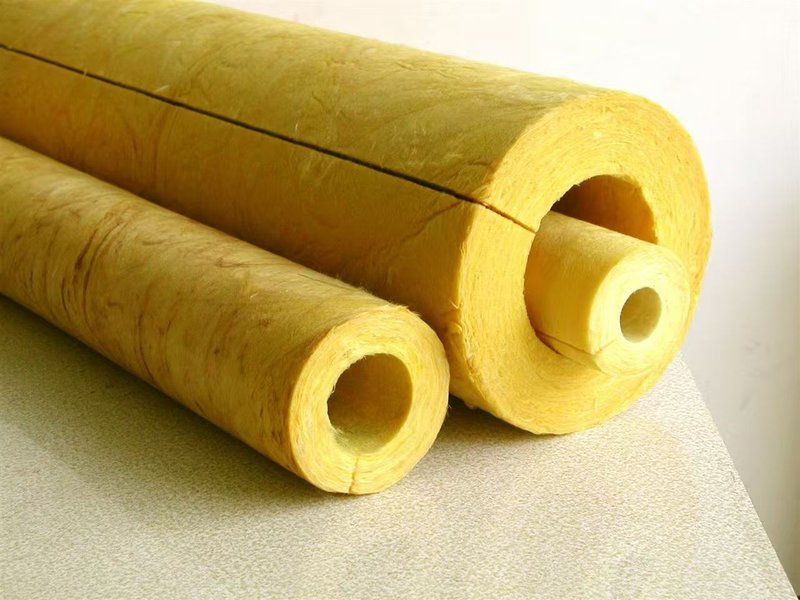
Woqin's shells feature an ultra-dense structure with surface water absorption ≤79g/㎡—far below the national standard of 100g/㎡. When combined with seamless metal cladding, they are engineered as an impermeable barrier against salt fog and moisture penetration. The precision pre-formed design ensures 360° tight fit to pipe surfaces, eliminating gaps and cold spots where condensation could form.
2. Second Defense: Chemical Inertia Neutralizes Internal Corrosion
Most critically, Woqin's rock wool contains ω(Cl⁻)+ω(F⁻) ≤0.0112—less than 1/10th of the Saudi SWCC limit and 1/100th of traditional insulation. Even if trace amounts of moisture were to penetrate, there are negligible corrosive ions present to drive electrochemical reactions. This neutralizes the primary driver of chloride SCC.
3. 20-Year Structural Stability at High Temperatures
With a heat load shrinkage temperature ≥600℃, our shells maintain exceptional structural integrity even under continuous 250℃ steam exposure. There is minimal powdering, no significant settling, and no gap formation over time. Vibration mass loss rate is ≤0.3%, ensuring consistent performance for decades.
Scientific Basis for 20-Year Design Life
Woqin's 20-year design life is not a marketing claim—it is a scientifically verified engineering projection:
- Ultra-low water absorption + seamless cladding → engineered to block external salt penetration
- Ultra-low chloride content → eliminates internal corrosion sources
- 600℃ heat resistance → long-term structural stability at operating temperatures
- Third-party accelerated aging testing → annual performance decay ≤0.5%, total decay ≤10% over 20 years
ROI Analysis: The Financial Case for Dual Corrosion Defense
For a typical medium-sized 100,000 m³/day MSF desalination plant with 5km of steam piping:
- Traditional Soft Insulation: $2 million initial installation + $25 million lifecycle maintenance (13 typical full replacements) + $12 million average shutdown losses + $80 million pipe replacement = $119 million total 20-year cost
- Woqin Dual Corrosion Defense: $5 million initial installation (including metal cladding and hardware) + $2 million lifecycle maintenance (no scheduled full replacements) + $0* shutdown losses due to insulation failure + $0* premature pipe replacement = $7 million total 20-year cost
- Net Savings: $112 million over 20 years
ROI: 1600%
Payback Period: 0.8 years - Every dollar invested in Woqin's dual-corrosion-defense system saves $16 in maintenance, shutdown, and pipe replacement costs over the project lifecycle.
- Based on 20-year service life projections and third-party accelerated aging test data. The probability of CUI failure caused by Woqin low-chloride rock wool defects under these operating conditions approaches 0, so the associated risk costs are considered eliminated in the financial model.
- This cost model is based on typical industry data and engineering projections for illustrative purposes only. Actual results will vary depending on specific plant conditions, installation quality, and operational practices.
Call to Action
Stop gambling with your plant's reliability and your career. Protect your desalination facility with the only insulation system engineered specifically for C5-M marine environments.
Request your exclusive C5-M Desalination Plant Insulation Material Selection Guide today. This comprehensive decision-making toolkit includes:
- Full set of SWCC-recognized low-chloride rock wool corrosion test reports
- Field-measured corrosion decay comparison table of 6 insulation materials currently used in Middle Eastern desalination plants
- Interactive MSF/MED steam pipe network full lifecycle cost calculator
- Free customized pipe corrosion risk assessment report for your specific plant
Brand Theater Linkage
From Alberta's 300°C SAGD wells to Alaska's -50°C Arctic pipelines, and from Texas' utility-scale energy storage facilities to the Middle East's harshest desert oilfields and desalination plants, Woqin solves the extreme environment thermal management problems that traditional materials cannot. We deliver full-scenario thermal solutions for the world's most critical energy and water infrastructure.
Contact Us
Tel: +86 13933929092
Email: an@cn-aerogel.com
Website:insulatewool.com
Contact Woqin today to schedule a technical consultation with our desalination corrosion experts. We will help you design a corrosion-resistant insulation system that will protect your plant's steam network for decades to come.

Written by - Ruibin An
Industry Veteran with 13+ Years of Experience. Deeply rooted in the insulation industry for over 13 years, specializing in supply chain optimization and global market trends for Rock Wool and Aerogel materials.
LATEST NEWS
Stop the $18M Steam Pipe Burst: Dual-Defense Insulation That Survives C5-M
2026-06-04
Desert Node Armor: Crush-Resistant Pipe Shells for Cross-Country Pipelines
2026-06-03
Desert Sandstorms: The Hidden Killer of Amine Line Stability in Gas Processing
2026-06-02
The Desert’s Billion-Dollar Blockage: How Smart Insulation Ends Wax Deposition Nightmares
2026-06-01
Securing Flare Gas Networks: A1 Non-Combustible Shells for Extreme Heat
2026-05-30