
Securing Flare Gas Networks: A1 Non-Combustible Shells for Extreme Heat
As you read this sentence, your plant's flare gas network is exposed to 55°C summer heat. A single stray spark could turn a minor leak into a billion-dollar disaster if your insulation has degraded into an accelerant. In the Middle East, extreme UV radiation and high temperatures exponentially amplify this risk. This article reveals the hidden dangers of inferior insulation and presents the definitive solution: our A1 class non-combustible rock wool pipe shells. Backed by third-party test data and proven in hundreds of regional facilities, they provide absolute fire protection and help you demonstrate full due diligence.
The Safety Lifeline That Can Become a Fuse
Flare gas networks are the circulatory system of every refinery. Stretching for kilometers across the plant, they collect waste hydrocarbons from every process unit and transport them to elevated flare stacks 30-100 meters high for safe combustion. Unlike process piping that operates at controlled temperatures and pressures, flare lines face unpredictable and extreme conditions that no other system in the plant must endure:
Intermittent exposure to temperatures up to 650°C during emergency flaring events, with thermal shocks that can crack poorly designed insulation
Continuous ambient temperatures of 45-55°C in Middle Eastern summer months, with surface temperatures reaching 75°C on unshaded piping
Constant presence of highly flammable methane, propane and butane mixtures at pressures ranging from near atmospheric to 10 bar
Extreme wind loads exceeding 120 km/h during desert sandstorms, combined with abrasive sand particles that erode insulation surfaces
A single pinhole leak in a flare gas line can ignite instantly. When this happens, the insulation surrounding the pipe becomes the single most critical factor determining whether the fire remains contained or escalates into a plant-wide disaster. For HSE directors and fire safety engineers, there is no margin for error in flare line insulation specification—one wrong decision can have irreversible consequences.
The 5-Layer Catastrophic Risk of Inferior Flare Gas Insulation
Environmental Layer: 55°C Pre-Heating + UV Degradation
In the Middle East's extreme summer climate, ambient temperatures alone preheat insulation materials to near their decomposition temperature before any fire even starts. Day-night temperature fluctuations of 20-30°C create microcracks in the insulation as materials expand and contract repeatedly. These microcracks allow flammable gases to penetrate deep into the insulation layer, where they mix with air and form explosive mixtures.
The result is hidden smoldering hazards that are completely invisible to routine visual inspections. Smoldering can continue for days or even weeks inside the insulation, slowly raising the temperature of the pipe wall until a catastrophic rupture occurs.
According to ADNOC's 2024 Outdoor Insulation Aging Performance Assessment Report, traditional organic binder insulation materials lose more than 42% of their flame retardant active ingredients within 3 years under intense Middle Eastern UV radiation. Their actual fire resistance rating drops from the nominal B1 level to B2 or even lower, completely losing their fire protection function long before their advertised 10-year service life ends.
Our Solution: Our A1 grade rock wool pipe shells are inherently inorganic and UV-stable. With a hot load shrinkage temperature of ≥600°C and organic content strictly controlled to ≤2.0% (half the industry standard), they show no signs of decomposition or aging even at internal insulation temperatures of 70°C. The acidity coefficient of ≥1.6 ensures long-term durability in harsh outdoor environments, with no loss of fire protection performance over time.
What This Means For You: You will never face the situation where your insulation has secretly turned into kindling while still under warranty. Our materials maintain 100% of their fire protection performance for their entire 30-year service life, eliminating the need for premature replacement.
Material Layer: Inferior Insulation That Acts as an Accelerant
More than 80% of low-cost insulation materials on the market contain 5-12% organic content, far exceeding the industry minimum standard of ≤4.0%. Even products that claim to meet the standard often only achieve this in carefully selected laboratory samples, with actual delivered products containing twice the stated organic content. This is the industry's worst-kept secret—and the biggest threat to your plant's safety.
These high organic content materials will spontaneously ignite at temperatures as low as 250°C, releasing flammable gases that cause deflagration and spread flames along pipelines at several meters per second. They generate highly toxic hydrogen cyanide and carbon monoxide that can incapacitate emergency responders within seconds—at concentrations as low as 200 ppm, hydrogen cyanide can cause loss of consciousness in less than one minute.
More fatally, burning inferior organic insulation produces molten drips with temperatures up to 1200°C. These drips penetrate protective nets, carry fire sources to lower platforms, cable trays and equipment areas, forming three-dimensional cross-fires that completely cut off firefighters' vertical rescue routes. This is the primary reason why multiple global petrochemical major fires in recent years have escalated from "localized leaks" to "plant-wide disasters"—once the rescue routes are cut, there is nothing anyone can do but watch the plant burn.
Our Solution: Fire That Stops at the Point of Origin
Our A1 non-combustible pipe shells fundamentally change the fire equation. Tested to GB/T 5464-2010 and GB/T 14402-2007, they achieve a furnace temperature rise of ≤30°C, 0 seconds of sustained flame, and a total calorific value of ≤2.0 MJ/kg. The organic content is strictly controlled to ≤2.0%, making them incapable of producing toxic smoke or 1200°C molten drips.
What This Means For You: In the event of a hydrocarbon leak, our insulation acts as an absolute firebreak. Flames are strictly confined to the leak point. There is no deflagration, no dripping fire sources to lower levels, and no toxic incapacitation of your response team. You gain the critical 30-60 seconds of golden time needed to isolate the leak and extinguish the fire, turning a potential plant-wide catastrophe into a controlled, localized incident. This performance is guaranteed by batch-level testing, not just a single sample.
Engineering Layer: High-Altitude Conditions That Amplify Failure
Flare stacks and elevated pipelines operate at heights of 30-100 meters, where wind speeds can exceed 120 km/h during sandstorms. The wind creates powerful suction forces on the leeward side of pipes that can tear away soft insulation materials and expose bare metal pipes. Even small gaps between insulation sections can create wind tunnels that accelerate flame spread by feeding fresh oxygen to the fire.
Long-distance pipeline installations spanning several kilometers mean that even a single weak point can lead to a system-wide disaster. Pressure relief vibrations during emergency flaring events cause poorly bonded insulation to detach prematurely, while high-altitude maintenance is prohibitively expensive and dangerous—each hour of high-altitude work costs over $1,000 and carries a significant risk of worker injury. Many facilities delay necessary repairs for years, allowing hidden hazards to grow unchecked until a catastrophic failure occurs.
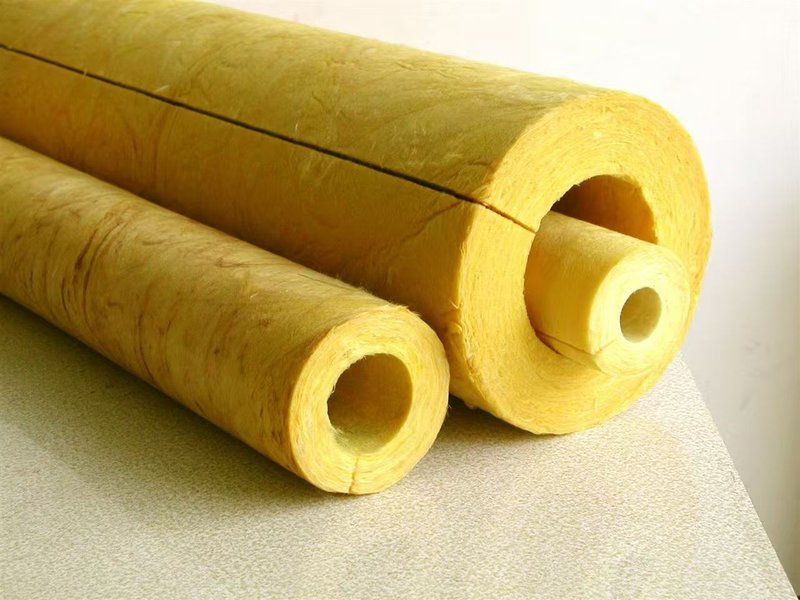
Our Solution: Our rigid rock wool pipe shells are specifically engineered for high-altitude industrial applications:
Full size coverage: inner diameters 18-610mm, thicknesses 30-200mm to fit all flare gas piping specifications
Precision manufacturing with tight dimensional tolerances: length -2~+5mm, inner diameter -3~+4mm, ensuring a perfect fit between sections
Tight joints between sections eliminate gaps that allow wind penetration and flame spread
High-strength structure resistant to vibration and sand abrasion, with a compressive strength of ≥40 kPa
Service life ≥30 years with virtually no maintenance required
What This Means For You: You will never have to send maintenance crews to dangerous heights to repair or replace blown-off insulation. Our system is installed once and remains intact and effective for the entire life of the pipeline, reducing maintenance costs by over 90% compared to soft insulation materials.
Financial Layer: Exponential Losses That Cannot Be Recovered
A flare network fire results in direct repair costs ranging from $5-20 million, including pipe replacement, equipment repair and environmental cleanup. For large-scale refineries, production losses can reach $10-30 million per day, with a typical shutdown lasting 2-6 weeks. Following a major incident, insurance premiums typically increase by 200-500%, and many insurers refuse to renew coverage entirely.
Most critically, companies found responsible for preventable accidents face permanent blacklisting by major Middle East operators including Saudi Aramco, ADNOC, and SABIC. In today's ESG-focused investment environment, a major safety accident can also cause a 5-15% drop in a company's stock price, erasing billions of dollars in shareholder value.
Conversely, facilities using A1-class non-combustible insulation now qualify for 15-25% property insurance premium discounts from all major regional insurers. These savings alone can offset the entire cost of the insulation system within 5-7 years.
Our Solution: Based on conservative calculations over a 30-year lifecycle, including potential accident losses and insurance costs, our A1-class rock wool pipe shells reduce total costs by more than 40% compared to inferior organic-based insulations. Our initial procurement cost is only about 1/3 that of aerogel insulation, with no ongoing replacement or maintenance expenses.
What This Means For You: You are not just buying insulation—you are investing in a comprehensive risk mitigation strategy that delivers measurable returns through lower insurance premiums and avoided operational disruptions. The modest cost difference between our premium solution and standard alternatives represents one of the most cost-effective safety investments available for your facility.
Professional Layer: Regulatory Compliance & Professional Accountability
In the Middle East petrochemical industry, major safety incidents carry significant regulatory and personal accountability implications for HSE leadership and engineering teams who oversee material specification and approval processes. Regional regulatory authorities maintain strict enforcement frameworks for preventable industrial accidents, with provisions for both organizational and individual disciplinary measures.
Most importantly, in the event of a major incident linked to substandard materials, the international professional credentials held by involved personnel (including NEBOSH and CSP certifications) may be subject to formal review by global industry bodies. This could have long-term implications for professional standing and eligibility for senior roles in the global petrochemical sector.
The professional and ethical responsibility to protect employee safety and facility integrity remains a fundamental priority for all HSE leaders.
Our Solution: We provide comprehensive compliance support and documentation that helps you demonstrate full due diligence in your material selection process, including:
Full set of independent third-party test reports for all performance parameters
Middle East petrochemical plant safety network qualification certificates
Engineering design guidelines for high-altitude flare line insulation
Documentation of over 1000 successful petrochemical project installations worldwide
What This Means For You: When an audit happens or an incident occurs, you will have a complete paper trail proving that you made a responsible, data-driven decision. All your choices are fully documented and supported by internationally recognized test data, helping you establish a strong due diligence defense and minimize personal exposure. You can sleep soundly knowing you have done everything possible to protect your plant, your employees, and your career.
Beyond Fire Protection: Three Hidden Safety Dividends
Our A1 grade rock wool pipe shells deliver more than just robust fire protection. They provide three additional critical safety benefits that most insulation suppliers never mention:
1. Industry-Leading Chloride Ion Corrosion Protection
90% of flare gas pipeline leaks are caused by chloride-induced stress corrosion cracking (SCC), yet most insulation materials on the market contain chloride levels as high as 0.1% or more. Our rock wool pipe shells strictly control chloride and fluoride ion content to ω(Cl⁻)+ω(F⁻) ≤0.0112%, 10 times lower than the industry average, meeting the strictest JC/T 618-2019 standards.
What This Means For You: We reduce pipeline corrosion rate by 90%, extend pipeline service life by 2-3 times, and eliminate the root cause of most leaks before they even start.
2. Complete Elimination of Hidden Smoldering Hazards
Smoldering inside insulation layers is the most dangerous undetectable fire hazard, invisible to routine inspections and standard fire detection systems. Our entirely inorganic A1 pipe shells cannot support smoldering, and their excellent breathability allows flammable gases to diffuse naturally without accumulation.
What This Means For You: There are no more unknown unknowns. You can be 100% confident that there are no hidden fires burning inside your insulation walls.
3. Fire Rescue Support Capability
Toxic smoke and extreme temperatures from burning inferior insulation often force firefighters to retreat and let fires burn out. Our A1 pipe shells do not burn or release toxic smoke, forming a solid thermal barrier that protects pipelines and creates a safe rescue environment.
What This Means For You: If the worst happens, your firefighters will have a fighting chance to save your plant and their own lives.
Take Action to Eliminate Your Biggest Fire Risk
Your next audit or insurance renewal may be sooner than you think. Ensure you have the right documentation in hand before it happens.
Don't let substandard insulation turn your safety lifeline into a ticking time bomb. Our A1 grade non-combustible rock wool pipe shells provide the absolute fire protection that flare gas networks demand, especially in the extreme heat of the Middle East.
Hebei Woqin Trade Co., Ltd.
• Phone/WhatsApp: +86 13933929092
• Email: an@cn-aerogel.com
• Website: insulatewool.com
Request our complete documentation package today:
Full A1 fire performance test reports from independent third-party laboratories
Middle East petrochemical plant safety network qualification certificates
Engineering design guidelines for

Written by - Ruibin An
Industry Veteran with 13+ Years of Experience. Deeply rooted in the insulation industry for over 13 years, specializing in supply chain optimization and global market trends for Rock Wool and Aerogel materials.
LATEST NEWS
High-Density Rigid PU Thermal Break Blocks: North American Code-Compliant Structural Solution
2026-07-01
Beyond Insulation: Why Structural Thermal Breaks Are Essential for Modern Industrial Infrastructure
2026-06-29
The Ultimate Guide: "Survival Rules" and System Defenses for Industrial Piping Insulation in Extreme Middle Eastern Environments
2026-06-25
Unlocking Aramco & SABIC Compliance: The Highly Secure Path to Mechanical Completion Sign-Off
2026-06-25
Cutting Pipeline Insulation Labor Costs by 40% in 50°C Middle East Heat
2026-06-18