
Conquering the Extremes: Defeating CUI and -162°C LNG Challenges with Aerogel Insulation
The modern Oil & Gas and petrochemical sectors face a dual crisis: the relentless degradation of critical assets via Corrosion Under Insulation (CUI) in high-temperature environments, and the strict volumetric and thermal demands of -162°C cryogenic LNG infrastructure. Traditional volume-based insulation materials are rapidly reaching their physical limits. This technical guide explores how nanoporous Silica Aerogel operates at the molecular level to break the "wet sponge" cycle of CUI, while simultaneously revolutionizing LNG pipe racks by saving massive amounts of structural steel and eliminating cryogenic shrinkage.
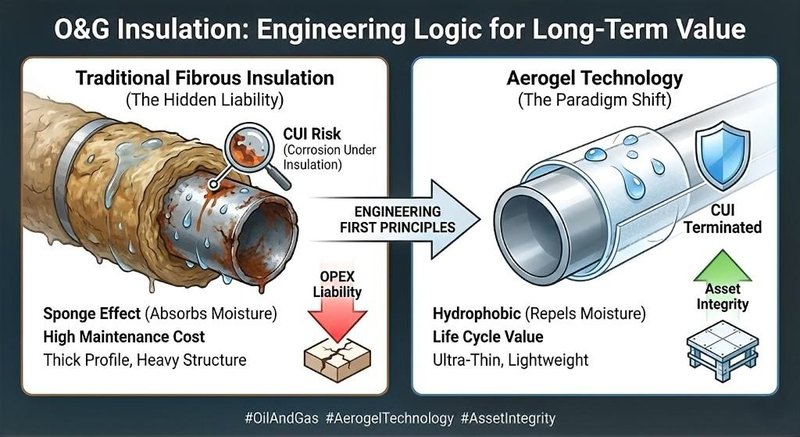
Introduction: The "Ice and Fire" Purgatory of Heavy Industry
Engineering, Procurement, and Construction (EPC) contractors today are fighting a war on two extreme fronts. On one side, aging refinery pipelines face the relentless, high-temperature threat of Corrosion Under Insulation (CUI). On the other side, the global energy transition is driving a massive boom in Liquefied Natural Gas (LNG) terminals and FLNG vessels, demanding uncompromising thermal protection at a cryogenic -162°C.
For decades, the industry has relied on traditional "bulk" materials—such as Cellular Glass, PIR (Polyisocyanurate), Mineral Wool, and Aluminum Silicate. However, these legacy materials are reaching their physical limits, unable to simultaneously combat moisture intrusion, cryogenic shrinkage, and extreme spatial constraints.
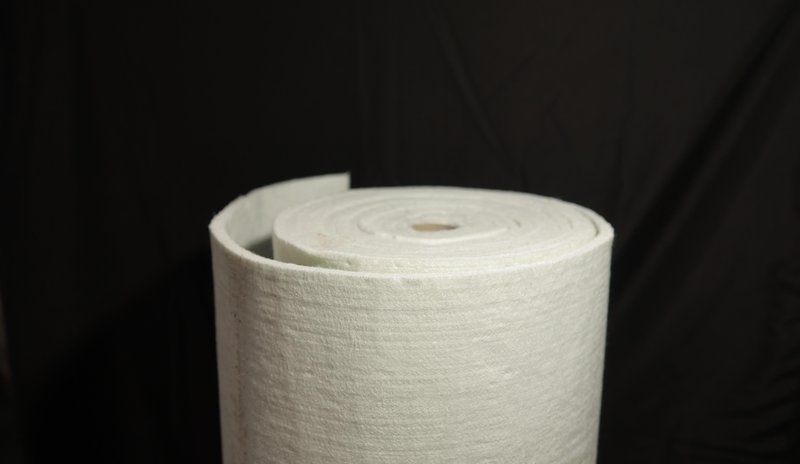
To conquer these extremes, the industry is turning to a molecular-level disruptor: Silica Aerogel Blankets.
Battleground 1: High Temperatures & Moisture – Ending the "Wet Sponge" Nightmare
As seasoned corrosion engineers often point out, asset integrity is not just an engineering problem; it is a microscopic battle against nature. No matter how high the grade of your stainless steel alloys, they will eventually surrender to nature if wrapped in traditional insulation that acts as a "wet sponge."
The Mechanism of CUI
Traditional fibrous insulation (like rock wool or ceramic fibers) is naturally hydrophilic. Even with metal cladding, thermal expansion, foot traffic, and extreme weather inevitably allow rainwater to penetrate. Once inside, the water is trapped against the hot pipe. At elevated temperatures, moisture and leached chlorides boil and concentrate, rapidly accelerating stress corrosion cracking (SCC) and eating right through the pipe wall.
The Aerogel Molecular Defense
You cannot fight nature's humidity, but you can alter the interaction at the molecular level. Silica Aerogel offers a profound physical defense mechanism:
- Nanoporous Hydrophobicity: Aerogel is engineered to be permanently hydrophobic (Contact angle > 150°). It actively repels liquid water, ensuring the insulation never absorbs moisture, breaking the water-to-metal contact loop entirely.
- Breathability: While liquid water is locked out, the nanoporous structure allows water vapor to escape. If any moisture does find its way to the pipe surface, the aerogel allows it to vent out, keeping the asset bone-dry.
Battleground 2: -162°C Cryogenics – The LNG Pipeline Diet
While CUI is a battle of moisture, LNG infrastructure is a battle of extreme cold and limited space. Maintaining natural gas in a liquid state at -162°C is critical; any thermal leak results in Boil-Off Gas (BOG), costing facilities millions of dollars in reliquefaction energy.
Defeating Cryogenic Shrinkage and "Ice Balls"
Traditional rigid cryogenic insulation, such as PIR and Cellular Glass, suffers from severe thermal contraction at -162°C. To prevent the insulation from shattering, engineers must design complex "Z-shaped contraction joints." These joints are notorious weak points where moisture infiltrates, forming destructive "ice balls" that tear the insulation system apart.
Aerogel blankets completely eliminate this risk. Remaining highly flexible even at -200°C, aerogel matches the thermal expansion coefficient of the underlying steel. No contraction joints are needed. This seamless wrapping significantly lowers BOG rates and eradicates the risk of ice ball formation.
The Ultimate System-Level ROI: Why EPCs Choose Aerogel
While the unit price of aerogel is higher than traditional materials, the System-Level Return on Investment (ROI) for large-scale projects is staggering.
- The "Space is Money" Equation: Because aerogel has the lowest thermal conductivity of any solid, it requires only 1/3 the thickness of traditional insulation. This reduces the outer diameter of insulated pipes by approximately 24%.
- Massive Steel Savings: Thinner pipes mean tighter spacing on pipe racks. In a typical LNG terminal or congested refinery, this volumetric reduction can save up to 1.83 tons of structural steel per meter of pipe rack.
- 30% Faster Installation: Aerogel is a flexible blanket that wraps around pipes easily. Without the need for complex sawing, rigid segment puzzle-fitting, or mastic jointing, installation speeds increase by up to 30%, accelerating the "Path to First LNG" and reducing expensive onsite labor hours.
The Hidden Trump Card: HSE & 4-in-1 Asset Protection
Modern facilities prioritize Health, Safety, and Environment (HSE) compliance just as much as thermal performance.
When workers remove traditional degraded high-temp ceramics, they are often exposed to hazardous, itchy airborne fibers, and sometimes even dangerous chromium (CR6) leaching. Aerogel is clean, non-toxic, and user-friendly, aligning with the strictest global HSE and labor protection standards.
Furthermore, a single installation of an Aerogel blanket delivers a 4-in-1 protection system:
- Ultimate Thermal Resistance (Cold/Hot)
- Acoustic Attenuation (Dampening loud compressor/valve noise)
- Cold Splash Protection (Protecting steel from accidental cryogenic spills)
- Passive Fire Protection (A1 Non-combustible, protecting against jet fires)
Conclusion
Whether you are battling the corrosive "wet sponge" effect on a 400°C steam line or trying to squeeze a -162°C LNG pipe into an overcrowded FLNG vessel, 20th-century bulk insulation is no longer sufficient. Aerogel provides a molecular-level solution that saves space, cuts structural costs, and permanently protects your assets.
At Hebei Woqin, we manufacture factory-direct, world-class Aerogel blankets for the most extreme industrial applications. Stop compromising on your asset integrity. [Contact our engineering team today] to request a customized technical data sheet (TDS) and arrange for physical samples to be shipped directly to your facility or testing laboratory.

Written by - Ruibin An
Industry Veteran with 13+ Years of Experience. Deeply rooted in the insulation industry for over 13 years, specializing in supply chain optimization and global market trends for Rock Wool and Aerogel materials.
LATEST NEWS
Calculated Oppression: How Thermal Drift and Structural Sagging Bleed Millions from Middle East Piping TCO (And the 20-Year Closed-Loop Solution)
2026-06-15
District Cooling in the Gulf: The Physics of Inevitable Condensation and How Pre-Formed Glass Wool Shells Stop It
2026-06-12
CCGT Power Plant Pipe Insulation English Marketing Copy (99-point Final Benchmark Version)
2026-06-10
Locking in 600°C: Composite Shells for CSP Molten Salt Pipelines in the GCC
2026-06-10
Blocking 55°C Desert Sun: Glass Wool Shells for Mega Water Transmission
2026-06-10