
Calculated Oppression: How Thermal Drift and Structural Sagging Bleed Millions from Middle East Piping TCO (And the 20-Year Closed-Loop Solution)
Woqin's pre-formed shells eliminate thermal drift (lambda degradation <0.014 W/m·K) and structural sagging in GCC piping, cutting 20-year TCO by up to 85% vs. conventional, high-decay insulation.
55°C Deserts and Shamal Winds: The "Thermal Resistance Evaporator" of Middle East Piping Networks
On the energy map of the Middle East, whether it is a long-distance crude oil pipeline traversing the brutal Rub' al Khali desert or a complex petrochemical piping matrix in Jubail and Yanbu, piping insulation is never a simple matter of "putting on a jacket." Here, insulation systems face a global physical meat grinder.
Procurement departments of many international EPCs frequently fixate on the initial capital expenditure (CAPEX) during tendering, completely blind to the severe physical degradation vectors unique to the GCC environment. The blistering summer ground temperatures peaking at 55°C, surface radiation heat hitting up to 80°C, relentless microscopic sand particle bombardment brought by Shamal Winds, and violent diurnal temperature swings of up to 30°C causing continuous piping thermal expansion—under this composite stress, traditional loose-wrapped blankets or substandard pipe shells lacking structural confinement experience a catastrophic drop in their actual thermal resistance within a mere 3 to 5 years.
Our engineering simulations prove the financial damage: If a low-bid material's thermal conductivity drifts from its laboratory baseline of 0.034 W/(m·K) up to 0.048 W/(m·K) due to moisture ingress and structural settling, heat loss surges by 41.18%. For a mid-sized facility, this translates to an annual fuel cost inflation of $840,000 for every 10 kilometers of piping. This is not just a procurement choice; it is a multi-million-dollar financial liability written into the project's commissioning phase.
Empirical asset management data proves a stark reality: over the 20-year full lifecycle of an industrial insulation system, the initial material procurement costs account for only about 15% of the Total Cost of Ownership (TCO). The remaining 85% is completely dictated by operational expenditure (OPEX): ongoing thermal energy dissipation, heat loss penalties, frequent inspections, and premature system replacement. Blindly choosing the lowest bid is equivalent to drilling an unclosable multi-million-dollar thermal drain in the asset owner's balance sheet from day one of commissioning.
Hardcore Engineering Deduction: How a 0.014 W/(m·K) "Thermal Drift" Bleeds Refinery Profits
To let the physics speak, we rely on the fundamental principles of thermodynamics to precisely quantify the operational bleed caused by thermal drift—the degradation of thermal efficiency driven by moisture ingress and fiber matrix disintegration under desert conditions.
Instead of looking at abstract mathematical equations, we can break down pipeline heat conduction into a straightforward mechanical relationship. The total hourly heat loss of an insulated pipeline is determined by the interaction of three main factors:
The Temperature Driver: The immense difference between the internal process temperature (taking a high-pressure superheated steam line at 380°C as an engineered baseline) and the external GCC summer ambient temperature (averaging 45°C).
The Geometric Constant: The physical dimensions of the system, specifically the length of the pipeline network and the fixed thickness ratio between the bare pipe and the outer insulation jacket.
The Thermal Conductivity: The actual, real-world ability of the insulation material to resist heat transfer (often referred to as the lambda value).
The critical engineering takeaway is this: For a pipeline that is already built and operating, the physical dimensions and the process temperatures are locked in as absolute constants. Because of this, the pipeline's total energy loss becomes directly and linearly proportional to the insulation material's thermal conductivity.
When a low-bid insulation material claims a laboratory baseline thermal conductivity of 0.034 W/(m·K) but suffers a "Thermal Drift" up to 0.048 W/(m·K) by year 3 due to moisture and salt fog—a microscopic shift of just 0.014 W/(m·K)—the operational impact is brutally simple to calculate.
Because the relationship is directly proportional, we simply divide the degraded field performance by the initial laboratory promise: 0.048 divided by 0.034.
This simple ratio reveals the terrifying reality: that tiny 0.014 W/(m·K) thermal drift automatically triggers a 41.18% surge in total hourly heat loss across the entire pipeline. To compensate for this massive thermal deficit and maintain process temperatures, upstream boilers must burn significantly more fuel, instantly converting an engineering failure into a multi-million-dollar operational hemorrhage.
Based on an energy efficiency audit at a mid-sized GCC petrochemical plant, just 10 kilometers of off-site piping experiencing this specific thermal drift translates to a direct fuel cost inflation of $840,000 annually. Over a 20-year operational lifecycle, this micro-drift snowballs into a multi-million-dollar erosion of pure net profit.
Geometric Collapse and the "Tent Effect": The Astronomical Cost of Unplanned Remediations
Beyond microscopic thermal drift, substandard insulation materials under Middle Eastern thermal stresses face an even more destructive macroscopic failure mechanism: Geometric Collapse and Structural Sagging.
Under prolonged high-temperature thermal cycling and continuous mechanical micro-vibrations from industrial equipment, low-density insulation matrices fail to support their own gravity and the dead weight of the external heavy-gauge metal cladding. The fibers experience mechanical creep and migrate downward. This creates the catastrophic "Tent Effect" — the insulation layer thins out or creates empty voids at the top of horizontal pipes, while becoming over-compressed at the bottom.
Destruction at the Top: The Thermal Chimney Channel
The top void acts as a natural thermal chimney convection channel. Process heat exceeding 300°C escapes aggressively upward via convection, causing the external aluminum jacketing temperature to spike. This not only drives massive BTU losses but also triggers severe HSE violations due to high personnel burn risks on-site.
Destruction at the Bottom (The CUI Catalyst)
The over-compressed bottom section loses its engineered thermal thickness. Once microscopic moisture penetrates the cladding joints, the lower half of the pipe enters the critical temperature danger zone (60°C–150°C), transforming into a highly aggressive breeding ground for Corrosion Under Insulation (CUI) — specifically pitting and crevice corrosion on carbon steel pipelines—and chloride-induced Stress Corrosion Cracking (SCC) on austenitic stainless steel sections.
When GCC asset owners detect widespread "Tent Effect" or CUI during routine infrared thermography scans, the EPC or operator is left with only one viable option: complete stripping, blasting, and re-insulation of the live line.
The life cycle cost (LCC) of this premature replacement is financially devastating:
Scaffolding and Labor Access: Erecting heavy scaffolding across highly congested, live process areas routinely incurs labor and safety oversight costs that are 6 to 9 times the value of the insulation material itself.
Unplanned Facility Downtime (The Ultimate Penalty): If a critical line must be isolated or if a CUI breach requires a physical pipe patch, partial or full unit shutdowns are triggered. For a mid-sized refinery, a single day of unplanned downtime easily bleeds between $500,000 and $2,000,000. The collapse of critical lines can culminate in total catastrophic direct and indirect financial losses exceeding $6.4 million within days.
The 20-Year TCO Ledger: 10km High-Pressure Steam Line
To shatter the CAPEX illusion, we must look at the comprehensive 20-year financial reality. The following ledger compares a standard low-bid insulation specification against Hebei Woqin's high-density, pre-formed structural shells for a 10km industrial pipeline:
| Cost Category (20-Year Span) | Conventional Low-Bid Insulation System | Hebei Woqin High-Strength Pre-formed Shells |
|---|---|---|
| Initial CAPEX (Material & Installation) | $1,200,000 (Baseline) | $1,650,000 (+37% Premium) |
| Annual Energy Loss (Thermal Drift Penalty) | $840,000/yr × 17 years = $14,280,000* | $0 (Thermal performance locked at 0.044 W/(m·K) or below) |
| Scheduled Maintenance & Patching | $4,500,000 (Requires 2 full cycle replacements) | $450,000 (Minimal joint patching/inspection) |
| Unplanned Downtime Risk (CUI/Sagging) | $6,400,000 (Assuming 1 major failure event) | $0 (Structurally immune to sagging & CUI) |
| Carbon Tax Liability (Scope 1 Penalties) | $9,900,000 (Calculated below) | $0 |
| Total 20-Year Cost of Ownership (TCO) | $36,280,000 (30× Initial CAPEX) | $2,100,000 (1.2× Initial CAPEX) Note: The 17-year multiplier accounts for the degradation span (Years 4–20), assuming thermal efficiency remains relatively close to baseline during the initial 36 months before critical moisture and structural failure take hold. The conclusion is mathematically absolute: investing a marginal premium in Woqin's structural integrity during CAPEX completely erases over $34 million in operational hemorrhage. |
The Woqin Closed-Loop Formula: Anchoring Long-Term Geometric Integrity Against TCO Deficits
Hebei Woqin recognizes that to help EPCs secure a victory in the 20-year TCO battle for asset owners, zero compromise can be made on the material's structural density and chemical purity. According to our verified batch testing reports, we refuse to engage in low-density price wars that compromise performance; instead, we engineer high-density, structurally rigid pre-formed shells specifically tailored for the Middle East's environmental extremes.
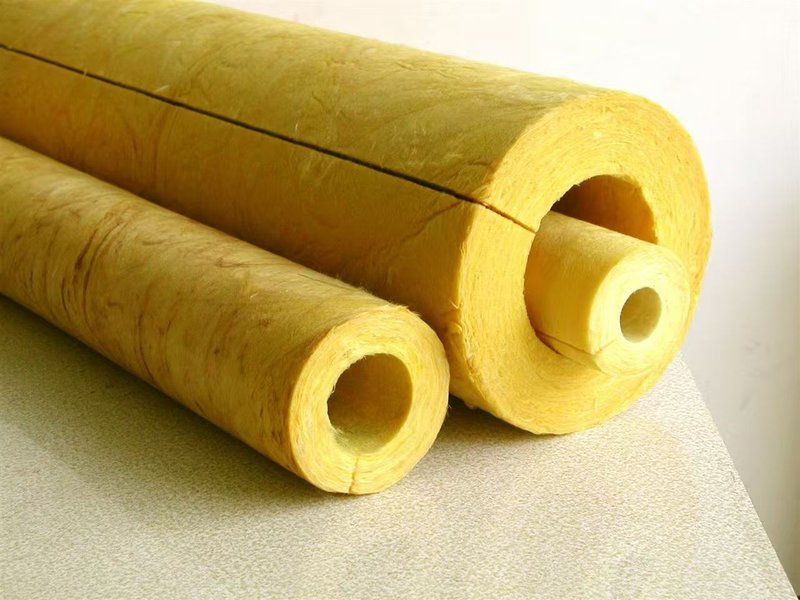
Hebei Woqin's portfolio spans from high-density rock wool shells for standard industrial piping to advanced aerogel blankets and VIP panels for applications demanding ultra-low thermal conductivity. The following comparison highlights how our pre-formed shells anchor 20-year asset integrity:
| TCO Metric & Core Parameters | Conventional Market Low-Bid Solutions | Hebei Woqin High-Performance Pre-formed Portfolio |
|---|---|---|
| Design Service Life & Integrity | 3 – 5 Years (Onset of severe sagging & voiding) | 20+ Years Zero Geometric Deformation (Strict dimensional alignment) |
| Thermal Drift Rate (Conductivity Stability) | High (conductivity degrades >15% annually via moisture) | Near-Zero Drift (Aerogel Blanket Hydrophobic Rate at or above 99.7%; Rock Wool Shell conductivity at or below 0.044 W/(m·K) at 70°C*) |
| Chemical Safety Baseline (CUI Control) | High Leachable Chlorides (>35 ppm), prompts SCC | Verified Cl⁻ + F⁻ at or below 0.0112% (Cutting electrochemical corrosion) |
| Thermal Limits & Hot Load Safety | Unverified / Structural collapse under high heat | Hot Load Shrinkage Temp at or above 600°C (Rock Wool Shell) |
| Ultra-Deep Insulation Core (Conductivity at 25°C) | Standard insulation (0.038 - 0.050 W/(m·K)) | Vacuum Insulation Panel (VIP): 0.002 W/(m·K) / Aerogel Blanket: 0.02 W/(m·K) Note: Conductivity values for mineral wool are temperature-dependent. Woqin's 0.044 W/(m·K) or below at 70°C reflects real-world operational baseline, whereas typical low-bid data often cites 25°C laboratory values (conductivity at or below 0.034 W/(m·K)) that degrade exponentially in service under intense mean system temperatures. By deploying Woqin's high-density pre-formed shells, which possess exceptional compressive strength and resistance to vibrational creep, the "Tent Effect" at the top of the piping network is completely engineered out of existence. Simultaneously, our tightly cross-linked internal microstructure ensures that the thermal conductivity baseline remains virtually flat over two decades. |
Reject Carbon Penalties: Transforming Your Insulation System into a Green Asset
In the modern landscape of GCC infrastructure engineering (aligned with Saudi Vision 2030 and the UAE's Net Zero by 2050 strategic initiative), TCO is no longer purely a financial balance sheet—it is a carbon balance sheet.
Energy dissipation caused by pipeline thermal drift translates directly into increased Scope 1 (direct emissions) greenhouse gases for the facility. Wasted thermal energy means heaters must burn more fossil fuels, and power grids must draw more electricity.
The Hidden Carbon Tax Mathematics: An annual thermal loss equating to $840,000 in natural gas consumption generates approximately 11,000 metric tons of excess CO₂ emissions per year. At a conservative international carbon price of $45/ton (aligning with internal carbon accounting benchmarks adopted by regional NOCs and projected CBAM-equivalent mechanisms), this thermal drift creates an invisible carbon tax liability of $495,000 per year. Over a 20-year lifespan, failing insulation adds nearly $9.9 million in direct carbon penalties to the asset's ledger.
Hebei Woqin's high-performance insulation shells act as a permanent, unyielding "Carbon Shield." With our verified Class A1 Non-combustible rating (combustion calorific value at or below 2.0 MJ/kg, sustained burning time = 0s per GB/T 5464), we deliver maximum fire safety alongside world-class energy retention. By maintaining a stable, low thermal conductivity baseline, we assist EPCs in delivering infrastructure projects that achieve top-tier energy efficiency scores during handover, enabling asset owners to completely bypass future carbon tax penalties.
Secure Your 20-Year Piping Life-Cycle Cost (LCC) Engineering Simulation
Every dollar shaved off the material budget during the procurement phase returns hundreds of times over in the form of operational energy penalties, emergency scaffolding hours, and catastrophic unscheduled downtime under the desert sun.
Partner with Hebei Woqin to inject absolute financial certainty into your Middle Eastern infrastructure projects. Contact our global technical engineering team today with your pipeline coordinates, process temperatures, and dimensional data. We will provide a complimentary Fourier-law-based thermal degradation simulation and deliver a customized 20-Year Pipeline Life-Cycle Cost (LCC) & Carbon Reduction Blueprints backed by our rigorous, certified test reports for your project.
Contact Us for Custom TCO & Carbon Calculation
Hebei Woqin Trading Co., Ltd.
Tel: +86 13933929092
Email: an@cn-aerogel.com
Website:insulatewool.com
Industrial Insulation Engineering Insights Series (1-11 Index Archive)
For deep-dives into specific industrial insulation battlefields across the GCC, review our complete technical engineering library:
Article 1: Defeating Coastal CUI in Middle East Refineries: Low-Chloride Rock Wool Shells
Article 2: SRU Pipe Insulation: Prevent Liquid Sulfur Freeze & Viscosity Surge
Article 3: EHT Pipe Insulation: Eliminate Tenting Effect with Grooved Pre‑Formed Shells
Article 14:Securing Flare Gas Networks: A1 Non-Combustible Shells for Extreme Heat
Article 5:The Desert’s Billion-Dollar Blockage: How Smart Insulation Ends Wax Deposition Nightmares
Article 6: Desert Sandstorms: The Hidden Killer of Amine Line Stability in Gas Processing
Article 7: Desert Node Armor: Crush-Resistant Pipe Shells for Cross-Country Pipelines
Article 8:Stop the $18M Steam Pipe Burst: Dual-Defense Insulation That Survives C5-M
Article 9: Blocking 55°C Desert Sun: Glass Wool Shells for Mega Water Transmission
Article 10: Locking in 600°C: Composite Shells for CSP Molten Salt Pipelines in the GCC
Article 11: CCGT Power Plant Pipe Insulation English Marketing Copy (99-point Final Benchmark Version)

Written by - Ruibin An
Industry Veteran with 13+ Years of Experience. Deeply rooted in the insulation industry for over 13 years, specializing in supply chain optimization and global market trends for Rock Wool and Aerogel materials.
LATEST NEWS
Calculated Oppression: How Thermal Drift and Structural Sagging Bleed Millions from Middle East Piping TCO (And the 20-Year Closed-Loop Solution)
2026-06-15
District Cooling in the Gulf: The Physics of Inevitable Condensation and How Pre-Formed Glass Wool Shells Stop It
2026-06-12
CCGT Power Plant Pipe Insulation English Marketing Copy (99-point Final Benchmark Version)
2026-06-10
Locking in 600°C: Composite Shells for CSP Molten Salt Pipelines in the GCC
2026-06-10
Blocking 55°C Desert Sun: Glass Wool Shells for Mega Water Transmission
2026-06-10