
The Last Unbroken Thermal Bridge: Why Column Bases Threaten Your License—and the Only Code-Compliant Fix
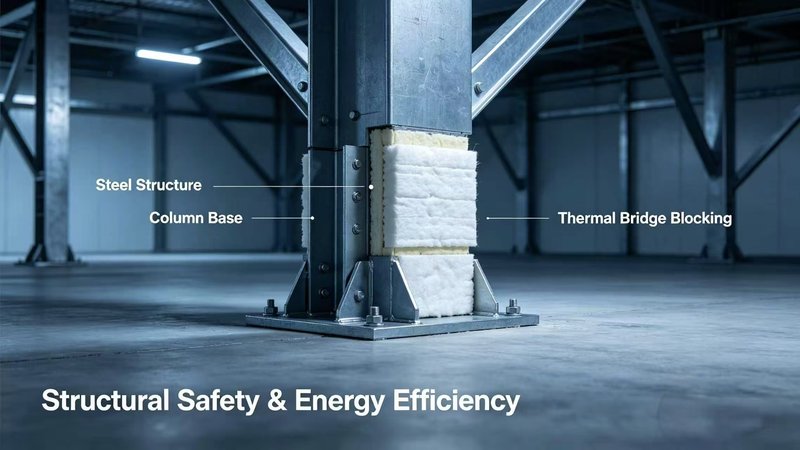
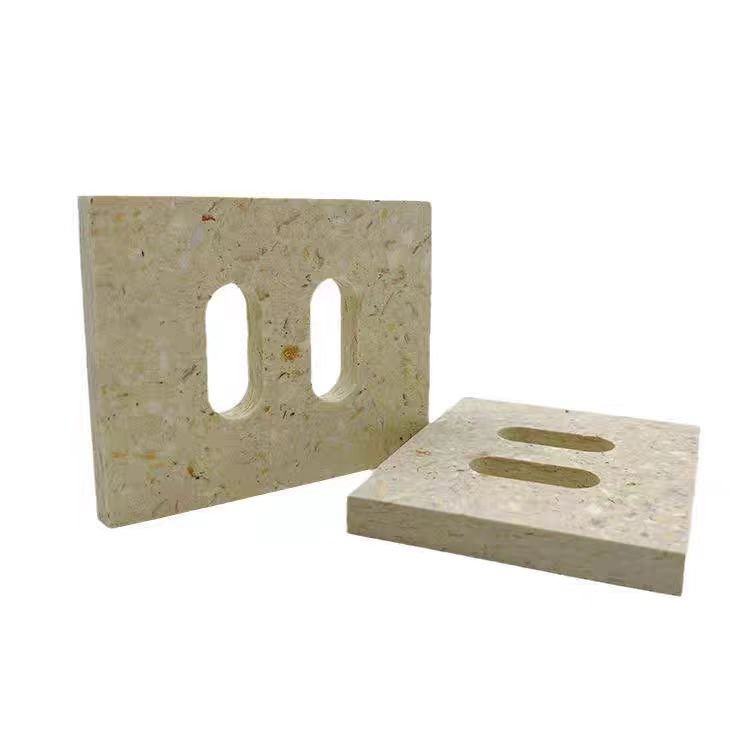
For licensed structural engineers and cold storage designers, column base thermal bridging is the most hidden but catastrophic risk in -25°C sub-zero warehouses. Steel columns act as a thermal conduit to freeze foundations, causing frost heave, structural settlement, anchor bolt embrittlement, and lifelong professional liability. All traditional thermal break solutions are structurally flawed and non-compliant. Hebei Woqin Structural HD-PUR Thermal Break Pads provide the only code-compliant, engineering-grade solution to eliminate all risks, secure design liability, and ensure 50-year structural life for cold chain facilities.
Licensed Structural Steel Engineers, Cold Storage Design Architects, MEP & Civil Consulting Engineers
Core Scenario: -25°C sub-zero warehouse environments, where load-bearing structural steel columns run directly from the cold interior through to the sub-surface foundation. Steel isn't just a good thermal conductor; in a cold storage context, it's a hypodermic needle injecting sub-zero temperatures directly into your foundation. This unbroken thermal bridge creates catastrophic, irreversible structural and operational failures.
Priority 1: Lifelong Liability & Catastrophic Structural Failure Risks (Non-Negotiable Core Pain Point)
This is the professional "life or death" for structural engineers. Under global building codes, engineers hold lifelong design liability for primary structural elements like column bases. There is no statute of limitations. This liability is personal, permanent, and non-transferable. Even decades after project handover, design flaws here can result in revoked professional licenses, massive indemnity claims, and even criminal liability in the event of a structural collapse.
Structural Instability & Overturning Risk from Differential Frost Heave/Settlement
In mega cold storage facilities (especially 30–40m high-bay ASRS warehouses), a single steel column carries hundreds to thousands of tons of vertical load. Uninterrupted thermal bridging continuously transfers -25°C cold to the foundation soil, which freezes and expands by 9% in volume, generating extreme, uneven upward frost heave forces that routinely shatter the factored safety margins of conventional foundation design, creating differential displacements severe enough to snap beam-column connections and warp 40m ASRS racking rails beyond repair. Adjacent columns experience uneven heave and settlement, directly causing column verticality exceedances and differential structural deformation. At best, this misaligns ASRS stacker crane systems and halts operations; at worst, it breaks the steel structure’s load-bearing system, triggering total structural instability and overturning—an irreversible, catastrophic engineering failure.
Permanent Foundation Bearing Capacity Degradation from Freeze-Thaw Cycling
Warehouse maintenance, seasonal temperature adjustments, and defrost cycles cause repeated freeze-thaw events in the foundation soil. This destroys the bond between soil particles, creating "soft soil" with a cliff-like drop in bearing capacity, rendering the original foundation design completely invalid. The steel column will undergo continuous, irreversible settlement, with no viable partial repair solution—ultimately requiring full demolition and reconstruction.
Sudden Brittle Fracture of Anchor Bolts/Base Plates from Low-Temperature Cold Embrittlement
Cold travels down the column to the anchor bolts and base plate. Standard carbon steel experiences a sharp drop in impact toughness at temperatures below -20°C, known as low-temperature cold embrittlement. Anchor bolts, the core tension components for column uplift and seismic resistance, can fail without warning via sudden fracture after embrittlement. This strips the column of its anchorage, completely eliminating the steel structure’s wind and seismic resistance, with zero opportunity for remedial action.
Premature End-of-Life Structural Failure from Condensation Corrosion
Column base thermal bridging causes continuous condensation at the node, leaving anchor bolts and base plates in a "low-temperature + high-humidity" high-rate electrochemical corrosion environment—corrosion rates are 3–5x faster than in ambient conditions. A structure designed for a 50-year service life may reach critical section loss and load-bearing failure in just 10 years. Worse, column anchor bolts are hidden load-bearing components that cannot be replaced or reinforced; once corrosion exceeds code limits, the only solution is full demolition.
Priority 2: The Unresolvable Design Dilemma (Core Daily Work Pain Point)
This is the universal, long-unresolved industry contradiction for cold storage designers and structural engineers: a no-win scenario where every traditional option creates critical flaws, with no mature, code-compliant standardized solution available.
Fundamental Conflict Between Energy Code Compliance and Structural Safety
Mandatory clauses in global standards (ASHRAE 90.1, IBC, EN 13162) impose strict thermal bridging control requirements for cold storage facilities. Failure to design a column base thermal break results in rejected energy audits and construction drawings, halting the project entirely. However, traditional thermal break materials (rubber pads, nylon spacers, standard insulation boards) either lack the compressive strength to support the column’s hundreds of tons of load, or have no structural engineering validation—engineers who use them pass energy compliance but accept lifelong structural liability; those who reject them cannot advance the project, creating an inescapable dilemma.
All Traditional Solutions Have Fatal Structural Flaws, No Mature Standardized Option
Existing industry thermal break solutions all have critical shortcomings, with no single product meeting the core requirements of load-bearing + thermal break + shear resistance + anchorage + fire retardancy. Engineers are forced to choose the "least bad option" from a pool of flawed solutions, with constant risk exposure:
Rubber/nylon spacers: Extremely low compressive strength, cannot support high-bay cold storage loads, and experience continuous creep deformation under long-term load, causing progressive column settlement.
Granite/FRP spacers: Meet hardness requirements but have extreme brittleness and near-zero shear strength. They shatter instantly under horizontal loads from forklift collisions or seismic events, with absolute zero nail pull resistance, making it structurally impossible to anchor the thermal break to the base plate. This transforms the node from a unified, restrained system into a structurally incompetent "sandwich" destined to drift and separate under load—an unconscionable risk for any licensed professional.
Multi-layer composite spacers: Prone to delamination and layer-by-layer failure, with no long-term in-service performance data, leaving engineers with no code-compliant design basis for high-load projects.
Extreme Node Complexity, Zero Construction Tolerance, and Unfair Liability for Installation Errors
The column base is the most mechanically complex node in cold storage design, requiring simultaneous compliance with 6 core requirements: vertical compression resistance, horizontal shear resistance, uplift resistance, seismic performance, fire safety, and thermal break performance. Traditional thermal break solutions require the node to be split into multiple irregular layers, doubling drawing complexity. Even minor installation errors (misaligned spacers, non-thermally broken bolts, inadequate anchorage) are undetectable after the concrete is poured, with no way to remediate. When thermal bridging fails or structural issues arise, the owner will solely blame the engineer for "unreasonable node design", forcing the engineer to bear full liability for construction team errors.
Millimeter-Level ASRS Precision Requirements Cannot Be Met by Traditional Solutions
30–40m high-bay automated cold storage facilities have millimeter-level requirements for column verticality, with a maximum allowable lifetime deformation of less than 2mm. All traditional thermal break materials experience long-term cold creep; even 0.1mm of annual deformation will break the precision threshold in 10 years, misaligning ASRS stacker crane rails and crashing the entire automated system. Traditional materials have no 30+ year long-term creep test data, leaving engineers with no valid basis for deformation calculations, making them entirely unusable for high-precision ASRS projects.
Priority 3: Mandatory Code Compliance & Professional Risk Constraints
Non-Negotiable Fire Code Barriers, Traditional Solutions Fail Outright
Cold storage is a high-priority fire safety regulated facility under NFPA 1, Eurocode, and IBC, which mandate flame retardancy requirements for all structural steel node components. Traditional rubber, nylon, and wooden spacers are Class B3 flammable, and most FRP spacers cannot meet Euroclass B1 (UL 94 V-0 equivalent) flame retardant standards. Using these materials results in failed fire inspections, project shutdowns, and costly full retrofits, with the engineer bearing full design compliance liability.
No Authoritative Test Data = Uninsurable Professional Risk
Every node design an engineer creates must be supported by third-party accredited test reports and alignment with global building codes, otherwise they are gambling their professional license and livelihood. Most traditional thermal break solutions have no full-performance testing, no long-term project case validation, and no code alignment. In the event of a failure, the engineer cannot provide evidence to defend themselves, facing immediate license revocation and multi-million-dollar indemnity claims.
Green Building/Carbon Neutrality Mandates, Thermal Bridging Failures Result in Automatic Rejection
Nearly all new cold storage projects require green building certification (LEED, BREEAM, DGNB) and carbon neutrality design. Column base thermal bridges are one of the largest heat leakage points in a cold storage facility; a single column’s thermal loss is equivalent to dozens of square meters of insulated warehouse wall. Failure to address this causes the building’s overall energy consumption to exceed limits, resulting in automatic rejection of green building certification and carbon neutrality audits, jeopardizing the owner’s project subsidies and operating qualifications, with liability falling directly on the design engineer.
Priority 4: Catastrophic Lifecycle Cost & Operational Backlash
Engineers are held accountable not just for design compliance, but for the owner’s full lifecycle project costs—these pain points directly determine the engineer’s industry reputation and future project opportunities.
Repair Costs Are 100x+ the Upfront Material Investment
Thermal bridging failure-induced foundation frost heave, column settlement, and anchor bolt corrosion are irreversible hidden works failures. Remediation requires full warehouse evacuation, jacking the entire steel column, dismantling the column base node, full foundation rework, and replacement of anchors and thermal break materials. The repair cost for a single column base is dozens of times the upfront material cost; cold storage downtime can reach hundreds of thousands of dollars per day, with total losses exceeding 100x the initial thermal break material investment. Put simply: every $1 saved on upfront column base insulation material can translate to $100+ in repair costs and legal damages when failure occurs, and professional indemnity claims against your license. The owner will attribute all losses directly to design defects.
Continuous Energy Overspend, Permanent Operational Cost Waste
An unbroken column base thermal bridge causes continuous cold leakage, adding hundreds of thousands of dollars in annual excess electricity costs for the owner. When the facility’s operational energy consumption far exceeds the design value, the owner will hold the engineer accountable for failed energy efficiency design, damaging industry reputation and opening the door to financial claims.
Frequent Maintenance Traps Engineers in Endless After-Sales Obligations
Traditional thermal break solutions require annual inspection for deformation, fracture, and corrosion, plus repeated column verticality calibration, creating extremely high maintenance costs. The owner will continuously demand the engineer attend site to resolve issues, consuming massive work hours, creating an industry reputation for "unreliable design", and directly reducing access to future large-scale project opportunities.
Priority 5: Hidden Industry Misconceptions & Design Traps (To Establish Solution Uniqueness)
The Industry Myth: "Insulating the Column Shaft Stops Thermal Bridging"
A critical pitfall for countless engineers: the false belief that cladding the interior column with insulation wool solves thermal bridging. In reality, the steel column is a continuous metallic thermal conductor—cold travels directly down the core of the column to the base and foundation, regardless of external insulation. A structural thermal break must be installed in the primary vertical load path of the column, a mistake many projects only discover after the foundation freezes, with no remediation options available.
The Single-Metric Trap: "Compressive Strength Is the Only Critical Specification"
A widespread industry misconception: selecting thermal break materials based solely on compressive strength, while ignoring core metrics like shear strength, nail pull resistance, long-term creep, freeze-thaw resistance, and flame retardancy. For example, granite spacers meet compressive strength requirements but have near-zero shear strength, shattering under horizontal load; standard PU boards meet compressive strength but have insufficient nail pull resistance, leading to loose anchorage and node failure. Engineers who focus only on a single metric face catastrophic failure and full liability.
The Industry Norm: "Quick Fix Temporary Solutions" With No Standardized Design Basis
Countless projects use non-structural materials as makeshift column base thermal breaks to meet deadlines and cut costs, with no structural calculations, thermal analysis, or fire validation. While no issues appear in the short term, failures occur en masse after 3–5 years. The industry has long lacked a standardized, fully tested, code-compliant mature solution, forcing engineers to design from scratch with extremely high failure risk. Every such "custom" design is a unique liability event with no legal precedent to protect the engineer.
Definitive Solution Matrix (Pain Point → Competitive Edge → Engineer Value)
| Core Pain Point | Our Definitive Engineering Advantage | Irreplaceable Value for Licensed Engineers |
|---|---|---|
| Lifelong Liability Risk: Fear of structural overturning, frost heave settlement, and revoked licenses from design flaws | 8.115 MPa Ultimate Compressive Strength + 30+ Years Near-Zero Creep + <1.5% Permanent Deformation | Secures Permanent Liability Protection: Your design is built on 30+ years of accredited test data, guaranteeing millimeter-level column verticality and eliminating frost heave/settlement risks with full audit-defensible documentation. |
| Unresolvable Design Dilemma: No way to achieve a unified, anchored load-bearing system with traditional spacers, forced to accept slip/separation risk | 8.17 MPa Flexural Strength + 620N Board Nail Pull Resistance | Delivers the Only Unified Structural Solution: Enables full through-bolt anchorage to form an integrated load-bearing system, eliminating "sandwich slip" and letting you specify a code-compliant structural unit with zero node redesign. |
| Code Compliance Risk: Fire inspection failures, energy audit rejections, and no defensible data for liability claims | Euroclass B1 Flame Retardancy + Stable Low Thermal Conductivity + Full Third-Party Accredited Test Dossier | Eliminates Fire & Energy Audit Risk Entirely: Full code compliance with legally defensible test reports for all inspections and liability claims. |
| Lifecycle Cost Catastrophe: Freeze-thaw corrosion, premature structural failure, and 100x repair costs from material failure | ≤2.1% Ultra-Low Water Absorption + >95% Closed-Cell Structure + Freeze-Thaw Cycle Compliance | Ensures 50-Year Design Life With Zero Cold Chain Corrosion: Blocks moisture and freeze-thaw damage at the source, protecting full structural life and owner assets. |
Request Technical Support
Get full third-party test reports, custom design calculations, and free project evaluation.
Technical Desk: an@cn-aerogel.com
Explore our Factory-Direct Capabilities: www.insulatewool.com
🔗 Explore Related Heavy-Load Engineering Solutions:
•[Preventing Frost Heave in Mega Cold Storage & ASRS: The HD-PUR Dual System]
•[ASRS High-Bay Freezers: Extreme Dynamic Point Load Solutions with HD-PUR]
•[Cryogenic Pipe Shoes in LNG Terminals: Replacing Wood with 8 MPa High-Density PUR]
•[The Invisible Threat to Pharma ASRS: When 2mm Deflection Becomes a 30mm Disaster]

Written by - Ruibin An
Industry Veteran with 13+ Years of Experience. Deeply rooted in the insulation industry for over 13 years, specializing in supply chain optimization and global market trends for Rock Wool and Aerogel materials.
LATEST NEWS
Acoustic & Thermal Insulation for HVAC Piping in Middle East Luxury Hotels
2026-06-16
Calculated Oppression: How Thermal Drift and Structural Sagging Bleed Millions from Middle East Piping TCO (And the 20-Year Closed-Loop Solution)
2026-06-15
District Cooling in the Gulf: The Physics of Inevitable Condensation and How Pre-Formed Glass Wool Shells Stop It
2026-06-12
CCGT Power Plant Pipe Insulation English Marketing Copy (99-point Final Benchmark Version)
2026-06-10
Locking in 600°C: Composite Shells for CSP Molten Salt Pipelines in the GCC
2026-06-10