
Redefining Cryogenic Insulation: How Fiberglass Core VIPs (0.002 W/m·K) Disrupt the Economics of LNG, Cold Storage, and Pharma Logistics
In cryogenic engineering, insulation thickness destroys profit margins. Discover how Fiberglass Core Vacuum Insulation Panels (VIPs) utilize a groundbreaking 0.002 W/(m·K) thermal conductivity to reduce insulation profiles by up to 90%. Learn how this unlocks massive ROI for LNG pipelines, high-end cold storage, and pharma cold chains.
As we discussed in our recent , modern industrial insulation is no longer just about temperature control. It has evolved into a high-stakes battle over three critical project factors: space, weight, and lifecycle costs. Nowhere is this battle more brutal than in Cryogenic and Cold Insulation. Whether you are managing Boil-Off Gas (BOG) in a -162°C Liquefied Natural Gas (LNG) terminal, maximizing pallet positions in premium urban cold storage, or paying exorbitant air freight rates for pharmaceutical cold chain logistics, the traditional industry approach has a fatal flaw: To maintain deep cold, you must use excessively thick insulation, which devours your usable space and hemorrhages project profits.
Today, forward-thinking Engineering, Procurement, and Construction (EPC) contractors and logistics giants are refusing to compromise. They are fundamentally rewriting the economic model of cryogenic engineering using one revolutionary core material: the Fiberglass Core Vacuum Insulation Panel (VIP).
The "Thickness Penalty" of Traditional Cold Insulation
When subjected to deep cryogenic environments, the limitations of traditional cold insulation materials (such as Polyisocyanurate - PIR, Polyurethane - PUR, or Cellular Glass) become glaringly obvious and financially draining:
1. The Massive Space Eater
To understand the paradigm shift, we must look at the math. Traditional rigid foams, such as PIR foam, typically offer a thermal conductivity ranging from 0.022 to 0.026 W/(m·K). To achieve the required thermal resistance at cryogenic temperatures (-162°C), these foams must be layered to staggering thicknesses—often exceeding 200mm to 300mm.
In congested petrochemical pipe racks, this extreme thickness causes severe pipe clashing, making layout design a nightmare. Furthermore, it exponentially increases the surface area, requiring massive amounts of expensive metal cladding (aluminum or stainless steel) to protect the insulation, severely inflating your Bill of Quantities (BOQ).
2. Long-Term Performance Degradation
Traditional blown foams rely on trapped insulating gases. Over time, due to thermal cycling and atmospheric pressure, these gases permeate and escape, leading to an irreversible degradation of thermal performance. This inevitably results in surface condensation, ice formation, and the eventual catastrophic failure of the entire cold insulation system.
The Material Science: Why "Fiberglass Core" VIP?
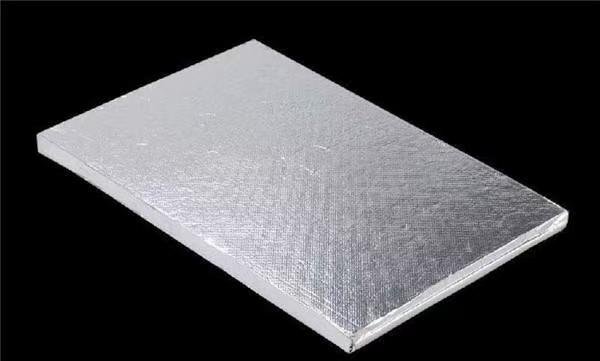
A Vacuum Insulation Panel (VIP) operates by evacuating the air from a porous core material and sealing it within a high-barrier envelope, fundamentally eliminating convective heat transfer. However, among all available core materials, the Fiberglass Core represents the ultimate sweet spot for industrial-scale performance and commercial viability.
- Breaking the Physical Limits of Thermal Conductivity: Our Fiberglass Core VIPs boast a rigorously tested, ultra-stable thermal conductivity of just 0.002 W/(m·K). Mathematically, this is more than 10 times more efficient than traditional PIR foam. This allows engineers to compress a bulky 250mm traditional cold insulation wall down to an incredibly slim 25mm, without sacrificing a single degree of thermal resistance.
- High Porosity and Structural Integrity: The micro-fiberglass matrix not only provides the exceptionally high porosity required to maintain a deep vacuum, but it also delivers superior compressive strength. This ensures the panels do not collapse or warp under extreme cryogenic contraction.
(Note: While Hebei Woqin also manufactures premium Stainless Steel Encapsulated VIPs—capable of surviving brutal mechanical impacts in niche military or specialized cryogenic equipment—the aluminum-plastic laminated Fiberglass Core VIP remains the undisputed champion of Return on Investment (ROI) for massive industrial piping networks and commercial architectural cold storage.)
Disrupting 3 Core Sectors with 0.002 W/m·K
By leveraging this 10x thermal advantage, Fiberglass Core VIPs are generating massive financial returns in three highly space- and temperature-sensitive industries:
1. LNG Terminals & Cryogenic Piping (-162°C)
In the storage and transport of Liquefied Natural Gas, heat ingress directly causes the liquid to vaporize into Boil-Off Gas (BOG), resulting in massive product loss.
By utilizing ultra-thin Fiberglass Core VIPs as the primary inner layer of a composite cryogenic insulation system, EPCs achieve two major victories:
- Near-Zero BOG: Heat ingress is virtually halted at the pipe surface.
- Drastic BOQ Reductions: The overall outer diameter of the insulated pipe is drastically reduced. This allows for tighter pipe rack spacing (saving facility footprint) and strips massive costs out of the metal cladding, jacketing, and structural support budgets.
2. High-End Commercial Cold Storage & Warehousing
For cold storage developers, internal volume is directly equivalent to rental revenue.
When building Automated Storage and Retrieval Systems (ASRS) or high-bay cold storage in urban centers, the external building footprint is strictly capped by local zoning laws. If you use 200mm thick traditional insulated sandwich panels, the walls encroach inward, destroying usable space.
By integrating Fiberglass Core VIPs into the floors and wall panels, the envelope becomes exceptionally thin. In a 10,000-square-meter facility, this space-saving technology can unlock hundreds of additional standard pallet positions. This is a one-time capital expenditure that generates compounding rental income for decades.
3. Pharmaceutical Cold Chain & Passive Shippers (-70°C to 2°C)
In the global distribution of highly sensitive mRNA vaccines and biologic drugs, air freight is charged by volumetric weight. Thick foam shipping boxes mean you are paying to fly air, not medicine.
By constructing passive temperature-controlled shippers with Fiberglass Core VIPs, logistics companies can maintain ultra-low internal temperatures for 96 to 120+ hours without external power or continuous dry ice replenishment.
Industry Case in Point: A leading multinational pharmaceutical company recently transitioned to our VIP insulated shippers for their global mRNA vaccine distribution. Because the VIP walls are incredibly thin yet highly efficient, the internal payload volume was drastically expanded. This resulted in a staggering 40% increase in vaccine vial capacity per flight, fundamentally reducing the air freight cost per dose.
Stop Paying for Thickness. Start Engineering for Profit.
For modern EPC engineers, cold storage developers, and logistics directors, selecting cold insulation is no longer just a technical checkbox—it is a critical financial equation.
The Fiberglass Core VIP (0.002 W/m·K) has transitioned from an aerospace luxury into a highly scalable, cost-reduction weapon. Whether you are protecting critical LNG pipelines, maximizing warehouse rental yields, or slashing pharma air freight costs, it is the ultimate engineering answer.
Are you ready to optimize your cold insulation BOQ and maximize your spatial ROI?

Written by - Ruibin An
Industry Veteran with 13+ Years of Experience. Deeply rooted in the insulation industry for over 13 years, specializing in supply chain optimization and global market trends for Rock Wool and Aerogel materials.
LATEST NEWS
Stop the $18M Steam Pipe Burst: Dual-Defense Insulation That Survives C5-M
2026-06-04
Desert Node Armor: Crush-Resistant Pipe Shells for Cross-Country Pipelines
2026-06-03
Desert Sandstorms: The Hidden Killer of Amine Line Stability in Gas Processing
2026-06-02
The Desert’s Billion-Dollar Blockage: How Smart Insulation Ends Wax Deposition Nightmares
2026-06-01
Securing Flare Gas Networks: A1 Non-Combustible Shells for Extreme Heat
2026-05-30