
Hebei Woqin Glass Wool: GOST-Certified Insulation for Russia’s Extreme Cold & Fire Compliance
Engineered for Russia’s -40°C extreme cold and strict GOST fire codes, Hebei Woqin’s certified glass wool delivers freeze-thaw resistance, moisture durability and Class A fire safety. Tailored for residential, industrial and public building projects across Moscow, St Petersburg and Siberia.
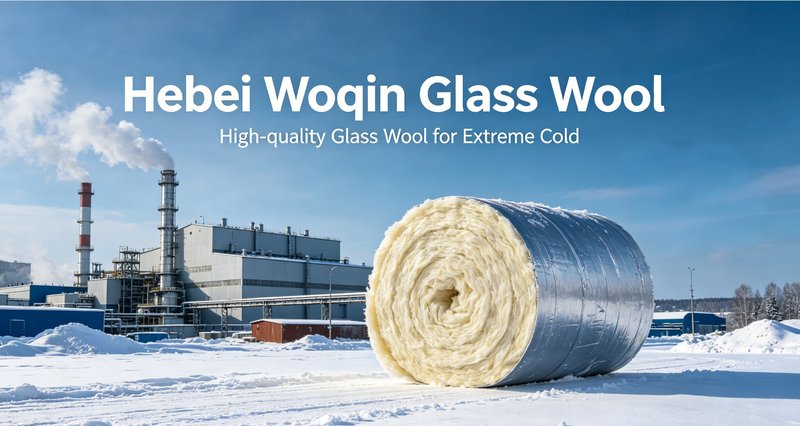
Russia’s high-latitude geography brings one of the harshest climates globally: 6-month freezing winters, temperatures plummeting to -40°C to -50°C, frequent freeze-thaw cycles, and heavy snowfall reaching 1–2 meters in Siberia. Compounded by stringent GOST fire regulations (GOST 30244, 123-FZ Federal Fire Safety Law) and high industrial energy consumption, Russian construction and industrial sectors face five non-negotiable insulation demands: extreme freeze resistance, moisture-proof durability, GOST-compliant fire safety, low energy loss, and vibration stability.
Hebei Woqin’s GOST-certified glass wool is engineered exclusively for Russia’s unique challenges. Core specifications: 1200mm width, 30–200mm thickness, 12–120kg/m³ density, thermal conductivity 0.03–0.04 W/(m·K), with long-term heat resistance up to 350°C (peak 400°C) and Class A non-combustible (NG grade). Every performance indicator aligns with Russian national standards, directly resolving layered pain points across residential, industrial, and public building scenarios.
1. Moscow & St Petersburg Residential Wall Insulation
Core Pain Points
Extreme freeze-thaw damage: -25°C to -40°C winters trigger repeated freeze-thaw cycles, causing wall cracking, peeling and structural durability loss.
Snowmelt seepage & mold: Heavy winter snow melts and penetrates ordinary insulation, leading to dampness, mold growth and interior blackening, threatening living health.
High energy & budget pressure: Sky-high heating costs exceed federal energy efficiency standards; a large number of Soviet-era old buildings face renovation budget constraints, requiring low-cost solutions for both freeze-thaw and energy issues.
Hebei Woqin’s Solution
Hebei Woqin’s 100–150mm thick GOST-certified glass wool adopts a professional moisture-resistant formulation, completely blocking snowmelt seepage and freeze-thaw damage. With ultra-low thermal conductivity of 0.03 W/(m·K), it cuts heating consumption by over 40%. Class A non-combustible performance meets residential fire codes, solving structural safety, health and budget problems in one go.
2. Siberian Steel Factory Roof Insulation
Core Pain Points
Heavy snow load collapse: 1–2 meters of winter snow exerts huge pressure; ordinary insulation crushes easily, causing roof leakage and equipment water damage.
Low-temperature brittleness: -50°C extreme cold makes ordinary materials brittle and crack, losing insulation effect.
Structural detachment risk: Steel thermal expansion and contraction accelerates insulation detachment; remote factories lack maintenance, leading to long-term failure and high energy costs.
Hebei Woqin’s Solution
Hebei Woqin’s 80–120kg/m³ high-density glass wool resists heavy snow crushing. GOST-certified dimensional stability guarantees reliable performance with no cracking, even at -40°C. It adapts to steel expansion/contraction, preventing detachment. Long-term weather resistance reduces maintenance frequency, eliminating leakage and production shutdown risks.
3. Russian Public Building Fire Insulation
Core Pain Points
Strict GOST compliance pressure: GOST 30244 and 123-FZ require Class A non-combustible insulation; non-compliant materials get rejected.
Long inspection & high rework cost: Fire inspection cycles are long; unqualified materials need full demolition and rework, causing heavy losses.
High-occupancy safety risks: Malls, schools, hospitals have dense crowds; ordinary materials release toxic smoke in fires, increasing casualties.
Hebei Woqin’s Solution
Hebei Woqin’s Class A non-combustible (NG grade) glass wool fully meets Russian fire standards. It blocks fire spread with no toxic smoke, helping projects pass stringent fire inspections in a single attempt — eliminating the risk of costly demolition and rework. Ideal for fire partitions and exhaust duct wrapping in public buildings.
4. Industrial & Energy Plant Pipe Insulation
Core Pain Points
Massive industrial heat loss: Pipelines run at 200–350°C; ordinary insulation has poor thermal resistance, causing huge energy waste.
Vibration-induced detachment: Equipment vibration loosens insulation, leading to detachment and safety hazards.
High maintenance costs: Frequent re-insulation increases operational expenses.
Hebei Woqin’s Solution
Hebei Woqin glass wool withstands 350°C long-term heat (peak 400°C). High-density flexible design fits tightly, staying intact under vibration. GOST thermal certification reduces heat loss significantly, ideal for power plants and chemical facilities.
Company Information
Hebei Woqin Trading Co., Ltd.
Website: insulatewool.com
Email: an@cn-aerogel.com
Phone: +86 13933929092
Hebei Woqin specializes in cross-border insulation supply for Russia and Central Asia. All glass wool products hold valid GOST certification (valid until 2028). We provide custom specifications, cross-border logistics and technical guidance. Contact us for Russian market insulation solutions.

Written by - Ruibin An
Industry Veteran with 13+ Years of Experience. Deeply rooted in the insulation industry for over 13 years, specializing in supply chain optimization and global market trends for Rock Wool and Aerogel materials.
LATEST NEWS
High-Density Rigid PU Thermal Break Blocks: North American Code-Compliant Structural Solution
2026-07-01
Beyond Insulation: Why Structural Thermal Breaks Are Essential for Modern Industrial Infrastructure
2026-06-29
The Ultimate Guide: "Survival Rules" and System Defenses for Industrial Piping Insulation in Extreme Middle Eastern Environments
2026-06-25
Unlocking Aramco & SABIC Compliance: The Highly Secure Path to Mechanical Completion Sign-Off
2026-06-25
Cutting Pipeline Insulation Labor Costs by 40% in 50°C Middle East Heat
2026-06-18