
erogel Properties Explained: Why 99.8% Porosity and 0.02 W/(m·K) Make Hebei Woqin Aerogel the 2025 Choice for Extreme Insulation
Aerogel’s extreme properties — 99.8% porosity, nanoscale pores (20–100 nm), specific surface area up to 1000 m²/g, density as low as 0.003 g/cm³, and thermal conductivity as low as 0.02 W/(m·K) — deliver insulation that outperforms traditional materials by 5–8× while adding almost zero weight or thickness. Hebei Woqin’s engineered aerogel blankets and coatings combine these properties with A1 fire rating, 99.7% hydrophobicity, and temperature resistance from –200°C to +650°C, making them the practical choice for oil & gas, construction, marine, and industrial applications in 2025.
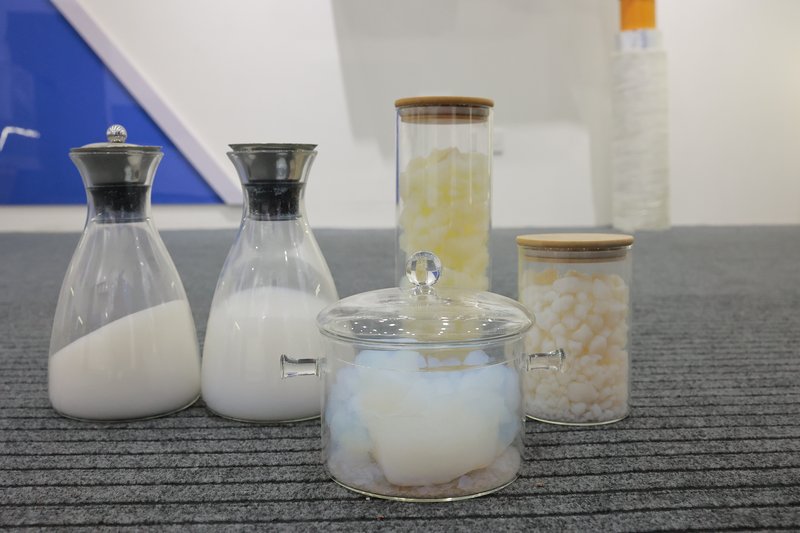
Aerogel Properties Explained: Why 99.8% Porosity and 0.02 W/(m·K) Make Hebei Woqin Aerogel the 2025 Choice for Extreme Insulation
My name is Ruibin. At Hebei Woqin we have been manufacturing and shipping aerogel blankets and coatings worldwide since 2016. Every time a client asks “what makes aerogel special?”, I point to the same eight fundamental properties that turn this material into the ultimate thermal guardian. Here they are — backed by our third-party test reports and real jobsite results.
1. Extremely High Porosity — Up to 99.8%
Aerogel is literally 99.8% air. This is not marketing hype. Independent testing confirms our silica aerogel structure traps air in a three-dimensional network that eliminates almost all heat transfer paths. The result? A material that feels lighter than a feather yet stops heat like nothing else on the market.
2. Nanoscale Pores (20–100 nm) and Three-Dimensional Nanostructure Particles (2–5 nm)
These tiny pores are smaller than the mean free path of air molecules (~70 nm). This triggers the Knudsen effect: gas molecules collide with pore walls instead of each other, slashing gaseous conduction to near zero. Our production process ensures pore uniformity within ±2%, which is why our blankets consistently hit stable performance even after years of service.
3. High Specific Surface Area — Up to 1000 m²/g
One gram of aerogel has the surface area of a football field. This massive internal area allows us to dope opacifiers (carbon black) that block 85% of radiative heat transfer. It also gives the material its legendary breathability while remaining hydrophobic.
4. Low Density — As Low as 0.003 g/cm³
Our finished blankets weigh only 0.8–1.2 kg/m². In new energy vehicles this translates to 12% lighter battery packs and better winter range. In offshore platforms it means no extra structural reinforcement is needed.
5. The Unique Structure Gives Extremely Low Thermal Conductivity — 0.012–0.014 W/(m·K) for Pure Aerogel, 0.02 W/(m·K) in Our Engineered Blankets
Third-party verification (GB/T 10295-2008) shows our blankets achieve 0.02 W/(m·K) at 25°C and 0.039 W/(m·K) at 300°C. A 10 mm layer replaces 50–100 mm of rock wool or PIR. In a Sydney passive house retrofit, this dropped the wall U-value from 1.94 to 0.31 W/m²·K without changing the heritage façade.
6. Hydrophobicity ≥99% (Our Products Reach 99.7%)
Tested per GB/T 10299-2011, water beads and rolls off even after 9 years of coastal exposure. This prevents Corrosion Under Insulation (CUI) in oil & gas pipelines and stops moisture degradation in humid climates like Queensland.
7. Fire Resistance Rating A1
Combustion performance (GB 8624-2012) shows furnace temperature rise of only 2–4°C, mass loss 2.1%, and total calorific value 1.9 MJ/kg. Zero smoke, zero toxic gas — safe for firefighter gear, commercial buildings, and high-risk industrial zones.
8. Superior Insulation and Temperature Resistance — Up to 1200°C for High-Temp Variants
Our standard blankets handle –196°C (LNG) to +650°C. Special alumina and SiC formulations push the limit to 1200°C+ with only 3% shrinkage, perfect for rocket engines, furnaces, and re-entry capsules.
Why These Properties Matter on Real Jobsites
- Oil & Gas: 10 mm blankets on –162°C LNG lines in Karratha keep jacket surfaces under 18°C and cut boil-off by >50%.
- Construction: 1–2 mm coatings on curtain walls eliminate cold bridges and condensation.
- Marine & Offshore: Lightweight + hydrophobic = no hidden corrosion in confined spaces.
- Industrial Equipment: Valves, tanks, and boilers stay protected without adding weight or thickness.
2025 Factory-Direct Pricing (FOB Tianjin)
- 6 mm blanket: USD 11–13/m²
- 10 mm blanket: USD 16–18/m²
- Aerogel coating (1–2 mm applied): USD 8–12/m²
Bulk orders (>5000 m²) already negotiate 15–20% lower.
Want to Verify These Properties Yourself?
I ship 1–2 m² free samples worldwide every day (you only pay DHL freight, usually USD 120–180). Each sample comes with the full test reports (including 99.7% hydrophobicity, 0.02 W/(m·K), and A1 combustion data) plus my direct WeChat.
Message me your application temperature, environment, or thickness requirement and I will tell you in 10 minutes whether aerogel is the right solution — or if VIPs or rock wool would be better.
We’ve already made all the expensive mistakes so you don’t have to.
Contact Hebei Woqin
Ruibin An
Business Development Manager
Hebei Woqin Trading Co., Ltd.
Phone / WhatsApp / WeChat: +86 139 3392 9092
Email: an@cn-aerogel.com
Website:insulatewool.com

Written by - Ruibin An
Industry Veteran with 13+ Years of Experience. Deeply rooted in the insulation industry for over 13 years, specializing in supply chain optimization and global market trends for Rock Wool and Aerogel materials.
LATEST NEWS
District Cooling in the Gulf: The Physics of Inevitable Condensation and How Pre-Formed Glass Wool Shells Stop It
2026-06-12
CCGT Power Plant Pipe Insulation English Marketing Copy (99-point Final Benchmark Version)
2026-06-10
Locking in 600°C: Composite Shells for CSP Molten Salt Pipelines in the GCC
2026-06-10
Blocking 55°C Desert Sun: Glass Wool Shells for Mega Water Transmission
2026-06-10
Stop the $18M Steam Pipe Burst: Dual-Defense Insulation That Survives C5-M
2026-06-04