
Defeating CUI in Southeast Asia: The Rise of Single-Component Aerogel Coatings in O&G
Southeast Asia’s extreme humidity makes CUI (Corrosion Under Insulation) the deadliest threat to O&G pipelines. Discover how pre-mixed, single-component aerogel coatings (0.032 W/m·K) are replacing brittle traditional materials to eliminate thermal bridges on complex geometries, providing Class A1 fire safety and 96-hour water resistance.
Introduction: The Climate Curse and the Insulation Dead End
Southeast Asia is a vital hub for the global Oil & Gas (O&G), petrochemical, and offshore (FPSO) industries. However, it also features the most hostile climate for industrial pipework on the planet: relentless humidity, heavy monsoon rains, and salt-laden atmospheres.
When traditional insulation materials (like mineral wool or PE foam) are deployed in this environment, they act as sponges. Once moisture breaches the weather cladding and reaches the high-temperature pipe surface, it triggers the industry's most expensive cancer: Corrosion Under Insulation (CUI). Specifying 1970s insulation standards in a modern Southeast Asian facility is no longer just inefficient—it is an operational liability.
Chapter 1: The Complex Geometry Nightmare
Even when high-end rigid materials are specified, they often fail on the front lines due to the realities of mechanical engineering.
- The Brittle Failure: Rigid insulators, such as cellular glass, frequently shatter at expansion joints during the dynamic thermal contraction and expansion phases of piping (a common failure mode seen in regional ammonia plants). Once the material cracks, moisture easily bypasses the thermal barrier.
- The Geometry Blind Spots: Valves, flanges, and pipe supports are the Achilles' heel of traditional wrap-around insulation. It is nearly impossible to perfectly clad these complex shapes with rigid boards or blankets. This creates exposed thermal bridges where condensation immediately forms and freezes (or vaporizes, depending on the process temperature).
- Application Errors: Traditional industrial thermal paints often require complex two-part (A+B) chemical mixing on-site. In the intense heat of a Southeast Asian site, human error in mixing ratios frequently leads to coating failure and cracking.
Chapter 2: The Physics of Pre-Mixed Aerogel Coatings
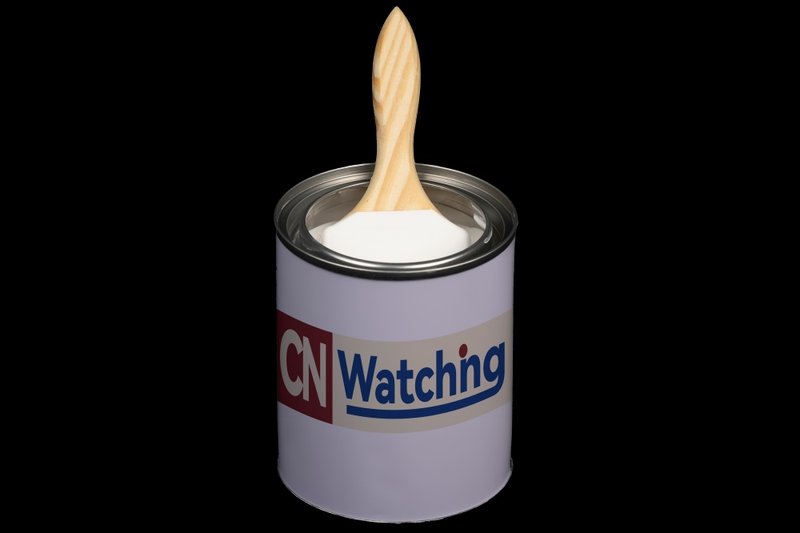
To solve this, Hebei Woqin engineered a purely active defense system: Single-Component Aerogel Coating. This is not magic; it is applied material science designed specifically to eliminate the gaps left by traditional cladding.
Backed by rigorous national laboratory testing, the physical parameters of our aerogel coating redefine thermal defense:
- 100% Pre-Mixed (Single Component): Delivered ready-to-use. Because aerogel particles are exceptionally lightweight (bulk density ratio of 45 kg/m³), they may float during transit. Applicators simply need to agitate the bucket with a standard low-speed drill mixer for 3-5 minutes to re-disperse the matrix uniformly. Zero on-site chemical blending means zero ratio errors.
- Extreme Thermal Resistance: The laboratory-tested thermal conductivity sits at a groundbreaking 0.032 W/(m·K) at 25°C. For industrial equipment operating up to 200°C, a millimeter-level coating thickness is sufficient to achieve dramatic heat retention.
- Eliminating the Air Gap (1.1 MPa Bond Strength): According to JG/T 157-2009 standards, the coating boasts a bond strength of 1.1 MPa. It bonds to the metal substrate like a second skin. By eliminating the annular air space between the pipe and the insulation, it removes the very environment where CUI develops.
Chapter 3: The Ultimate Defense — Water and Fire
In the O&G sector, thermal performance means nothing without safety and durability. Our coating has been tested against the harshest metrics:
- Relentless Hydrophobicity: Under the GB/T 1733 testing standard, the coating exhibited no abnormality after 96 hours of continuous water exposure. Once cured, it forms an impenetrable hydrophobic shield against monsoon rains and saline moisture.
- Maximum Fire Safety (Class A1): Tested under GB/T 5464 and GB/T 14402, the coating achieved the highest Class A1 (Non-combustible) rating. The data is definitive and easily surpasses refinery safety specifications:
- Sustained burning time: 0 seconds
- Average furnace temperature rise: 4°C
- Mass loss rate: 0.02%
- Total combustion calorific value: 0.3 MJ/kg
Chapter 4: Core Applications in Southeast Asia
- Safe-Touch (Personnel Protection): In cramped petrochemical plants or FPSO platforms, exposed high-temperature pipes are a severe burn hazard. Just a few millimeters of our aerogel coating can drop a 150°C surface down to a safe-touch temperature (below 60°C) without bulking up the pipe's external diameter.
- The "Geometry Terminator": If you can spray it or brush it, you can insulate it. It provides a seamless thermal envelope over complex valves, flanges, and structural pipe supports where blankets fail.
- Offshore FPSO Weight Reduction: Space and weight are at an absolute premium offshore. Replacing bulky metal-clad mineral wool with ultra-thin aerogel coatings frees up critical load capacity and tight walkways on FPSO vessels.
Conclusion: From Passive Wrapping to Active Defense
The Southeast Asian O&G market cannot afford to keep paying for "free meat freezers" (icing on failed cryogenic supports) or replacing rusted pipes due to outdated insulation specs. Hebei Woqin’s single-component aerogel coating shifts the paradigm from passively wrapping pipes to actively defending them.
It is time to rewrite the heat loss tables and update the specifications. Discover the next generation of CUI prevention at www.insulatewool.com.

Written by - Ruibin An
Industry Veteran with 13+ Years of Experience. Deeply rooted in the insulation industry for over 13 years, specializing in supply chain optimization and global market trends for Rock Wool and Aerogel materials.
LATEST NEWS
Acoustic & Thermal Insulation for HVAC Piping in Middle East Luxury Hotels
2026-06-16
Calculated Oppression: How Thermal Drift and Structural Sagging Bleed Millions from Middle East Piping TCO (And the 20-Year Closed-Loop Solution)
2026-06-15
District Cooling in the Gulf: The Physics of Inevitable Condensation and How Pre-Formed Glass Wool Shells Stop It
2026-06-12
CCGT Power Plant Pipe Insulation English Marketing Copy (99-point Final Benchmark Version)
2026-06-10
Locking in 600°C: Composite Shells for CSP Molten Salt Pipelines in the GCC
2026-06-10