
The 0.020 W/(m·K) Revolution: Why Aerogel Blankets are Replacing Traditional Insulation in 2026
As industrial energy costs soar and space becomes a premium currency, traditional insulation materials like rock wool and glass wool are reaching their physical limits. This article, authored by Ruibin An, founder of Hebei Woqin Trading, explores the transition of aerogel from a "laboratory curiosity" to an industrial powerhouse. By analyzing core data from test report 24050192F—including a 0.020 W/(m·K) thermal conductivity and 99.7% hydrophobicity—we demonstrate how Hebei Woqin’s aerogel blankets solve the twin challenges of Corrosion Under Insulation (CUI) and extreme space constraints in petrochemical, construction, and EV battery sectors.
I. From "Solid Smoke" to Industrial Reality
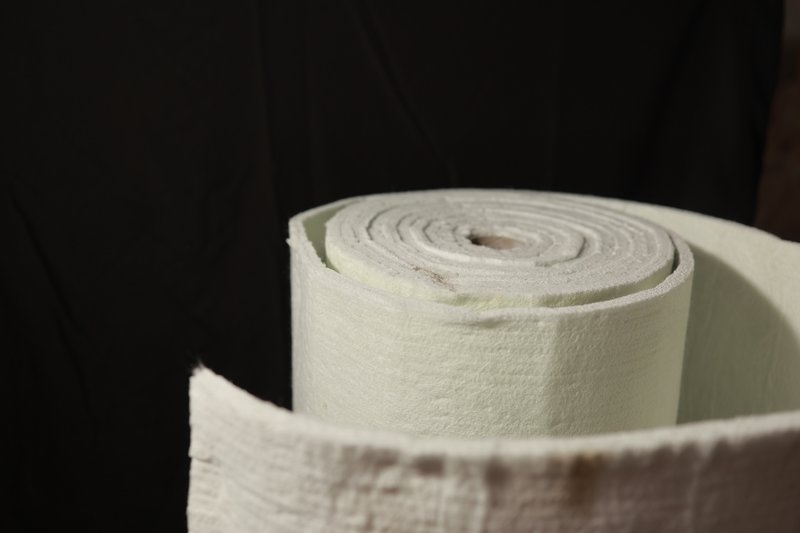
For over 15 years, I have tracked the evolution of silica aerogel. Once dubbed "solid smoke" for its ethereal appearance, it held the Guinness World Record for the world's least dense solid. However, for a long time, its brittleness made it impractical for the rugged environments of a 1,000-degree steam pipe or a high-traffic construction site.
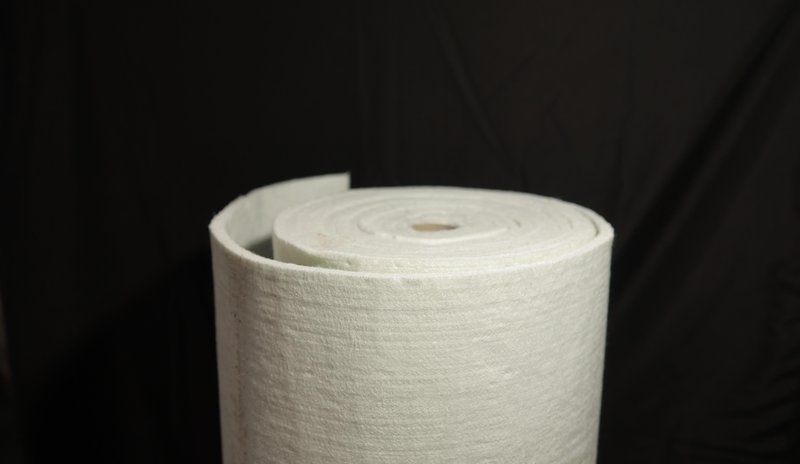
The Aerogel Blanket changed the game. By reinforcing the nanoporous aerogel structure with a flexible fiber matrix (typically fiberglass or pre-oxidized fiber), we have created a material that is as flexible as leather but as thermally resistant as a vacuum. At Hebei Woqin Trading, we don’t just supply insulation; we provide a "thermal shield" that allows engineers to do more with less.
II. Breaking the Physics of Heat: The Data Advantage
In my daily negotiations with clients from Italy to the USA, the question is always: "Ruibin, why should I pay the aerogel premium?" My answer lies in Performance Density.
1. The 0.020 W/(m·K) Benchmark
According to our latest third-party testing (Report No. 24050192F), our aerogel blanket achieves a thermal conductivity of 0.020 W/(m·K) at 25°C. To put this in perspective:
- Traditional Rock Wool: 0.035 - 0.045 W/(m·K)
- Polyurethane (PU): 0.024 - 0.030 W/(m·K)
- Woqin Aerogel: 0.020 W/(m·K)
This means that to achieve the same R-value, an aerogel blanket is 1/3 to 1/5 the thickness of traditional materials. In a refinery where pipe racks are packed tightly, this "thinness" isn't just a feature—it's the only way to fit insulation without redesigning the entire infrastructure.
2. Thermal Stability up to 1000°C
While organic foams fail at 150°C, our aerogel blankets remain stable. Even at a mean temperature of 300°C, our test results show a conductivity of only 0.039 W/(m·K). This performance ensures that in high-pressure steam applications, heat loss is reduced by over 60% compared to calcium silicate boards.
III. The 99.7% Hydrophobicity: Solving the CUI Nightmare
In the petrochemical and marine industries, the greatest enemy is Corrosion Under Insulation (CUI). When traditional insulation absorbs moisture, it acts as a wet sponge against carbon steel pipes, leading to hidden, catastrophic rust.
Our aerogel blankets feature a 99.7% Hydrophobicity Rate. Because the nanopores are smaller than a water molecule but larger than a vapor molecule, the material "breathes" while totally repelling liquid water.
- The Result: Your pipes stay dry. The insulation value remains constant for 25+ years.
- The ROI: By preventing a single CUI-related shutdown, the aerogel blanket pays for itself across the entire plant.
IV. Cross-Sector Case Studies: Real-World Impact
1. Architectural Retrofitting in High-Density Cities
In European cities like Paris or Milan, where historical facades cannot be altered, our 10mm aerogel blankets are used for internal wall insulation. In a recent project, replacing 100mm of traditional insulation with 20mm of aerogel saved enough internal space to increase the rentable area by 2%, effectively paying for the material costs within the first year of leasing.
2. The EV Battery "Thermal Runaway" Barrier
The automotive industry is our fastest-growing market. We are now supplying ultra-thin aerogel blankets as thermal barriers between battery cells. With a Class A1 Non-combustible rating, our material prevents "thermal runaway" propagation, giving passengers critical minutes to exit the vehicle in the event of a cell failure.
3. Cryogenic Excellence
It’s not just about heat. In LNG (Liquefied Natural Gas) terminals, aerogel blankets prevent "boil-off" gas losses far more effectively than PIR or foam glass, operating efficiently down to -200°C without becoming brittle.
V. Operational Efficiency: Lightweight & Flexible
One of the hidden costs of insulation is labor and logistics.
- Weight: Our blankets have a vibration mass loss rate of only 0.3% (per GB/T 34336-2017), meaning they don't "powder" or degrade under industrial vibration. They are roughly 1/4 the weight of traditional heavy-duty insulation.
- Geometry: Whether it’s a complex valve, a T-joint, or a spherical tank, the flexibility of the Woqin blanket allows for seamless wrapping. Our clients report a 40% increase in installation speed, significantly reducing man-hours during maintenance turnarounds.
VI. Global Compliance & Supply Chain Security
At Hebei Woqin, we understand that for our partners in the EU and North America, a test report is only as good as the legal framework behind it.
- European Representation: We are fully compliant with the EU Product Safety Act (ProdSG). Through our authorized representative, TOCYA TRADING in Paris, we ensure that every roll of aerogel shipped to Europe meets all regulatory requirements and safety standards.
- Quality Assurance: Every batch undergoes rigorous testing for density, conductivity, and hydrophobicity. We don't just ship products; we ship "Certified Performance."
VII. Conclusion: Future-Proofing Your Assets
In 2026, the cost of energy and the urgency of carbon reduction leave no room for inefficient materials. Using 1990s-era insulation for a 2026 project is a strategic liability.
At Hebei Woqin Trading Co., Ltd., we are making "Space-Age" technology an accessible reality for the global market. Whether you are insulating a refinery in Italy, a battery pack in Detroit, or a high-rise in Shanghai, our aerogel blankets provide the ultimate balance of thickness, safety, and thermal resistance.
Stop letting your energy—and your profits—evaporate.
Contact me today for a custom thermal calculation.
Ruibin An
Founder, Hebei Woqin Trading Co., Ltd.
Expert in High-Performance Thermal Solutions
Written by - Ruibin An
Industry Veteran with 13+ Years of Experience. Deeply rooted in the insulation industry for over 13 years, specializing in supply chain optimization and global market trends for Rock Wool and Aerogel materials.
LATEST NEWS
District Cooling in the Gulf: The Physics of Inevitable Condensation and How Pre-Formed Glass Wool Shells Stop It
2026-06-12
CCGT Power Plant Pipe Insulation English Marketing Copy (99-point Final Benchmark Version)
2026-06-10
Locking in 600°C: Composite Shells for CSP Molten Salt Pipelines in the GCC
2026-06-10
Blocking 55°C Desert Sun: Glass Wool Shells for Mega Water Transmission
2026-06-10
Stop the $18M Steam Pipe Burst: Dual-Defense Insulation That Survives C5-M
2026-06-04