Modular Pre-Assembled Racks (PARs): 620N Screw Holding Power HD-PUR, The Definitive Solution for Global EPC Modular Construction
Modular construction has become the gold standard for global tier-1 EPCs—but its efficiency gains are being silently eroded by a single point of failure: the pipe support connection. This article presents a comprehensive analysis of the full-link failure risks of legacy materials in modular PAR projects, and introduces Hebei Woqin's 620N screw holding power HD-PUR as a structural solution that transforms the pipe support from the weakest link into a reliable, load-bearing fastening node. We break down the material's performance across prefabrication, ocean transit, on-site installation, and 30-year lifecycle operation, and quantify its tangible commercial value for EPC bidding, cost control, compliance, and ESG performance.
Part 1: The Core Paradox of Modular Construction – Prefabrication Efficiency Dividends Are Being Eroded by Full-Link Failure Risks of Pipe Supports
Core Positioning: Problem Framing | Target Audience: Modular Construction Engineers, Pre-Assembly Yard Managers | Content Proportion: 30%Writing Logic: Establish industry consensus → expose the fatal weak link of modular construction → prove legacy materials cannot meet modern requirements, to build strong resonance with the target audience
1.1 Industry Trend: Modularization Has Become the Gold Standard for Global Top-Tier EPCs
The global energy and petrochemical infrastructure sector is undergoing a fundamental shift in construction methodology, and modularization stands at the center of this transformation. For industry leaders including Fluor, McDermott, Bechtel, and KBR, Modular Pre-Assembled Racks (PARs) and Pre-Assembled Units (PAUs) are no longer an experimental solution — they are the mandatory strategy to address three core pain points of traditional on-site construction:
· Schedule Compression: Off-site prefabrication routinely compresses on-site construction timelines by 30% or more for large-scale LNG terminals and petrochemical plants, a make-or-break factor in meeting tight project delivery windows.
· Cost Control: Factory-based assembly reduces reliance on expensive on-site labor (especially in high-wage regions like North America, where skilled pipefitters often command over $120 /hour) and minimizes weather-related delays that inflate project budgets.
· Quality Assurance: Controlled workshop environments eliminate on-site variables (e.g., dust, humidity, ad-hoc modifications), ensuring every weld, fastener, and pipe alignment meets ASME B31.3 and API 570 standards — a non-negotiable requirement for cryogenic LNG service.
At its core, modular construction relies on one inviolable premise: the precision achieved in the pre-assembly yard must remain fully intact through every subsequent step — from loading onto ocean vessels, to 30 – 45 days of intercontinental transit, to final on-site installation. Break this chain, and the entire efficiency value of modularization collapses entirely.
1.2 The Fatal Failure Point: Pipe Support Connection, the Weak Link That Wipes Out Modular Advantages
For all its transformative efficiency, modular construction has a hidden Achilles’ heel: the pipe support-to-steel rack connection. This seemingly minor component is the single point of failure that erases 100% of prefabrication gains, with risks manifesting across three critical stages of the modular project lifecycle:
1.2.1 Pre-Assembly Yard: Legacy Materials Create Bottlenecks That Slow Down Factory-Style Efficiency
Modular yards are built for assembly-line speed, but traditional pipe support materials grind this optimized pace to a halt:
· Complex Installation Process: Natural wood supports require pre-drilling (to avoid splitting), anti-corrosion impregnation (a 24-hour curing process), and additional metal limit frames or secondary steel hoops to secure insulation — adding significantly more labor hours per unit than structurally fastenable alternatives. Ordinary high-density PUR, meanwhile, is prone to stress cracking during drilling and screw driving, forcing workers to discard 8 – 10% of units mid-installation.
· Extreme Material Inconsistency: Natural wood has inherent defects including knots, grain direction differences, and uneven density, making it an anisotropic material. For natural wood, 40% fluctuations in screw holding power and compressive strength within the same batch are common, leading to frequent fastener slippage and stress fragmentation during prefabrication, and creating hidden defects that only surface during transit.
· Poor Dimensional Stability: Wooden pipe supports undergo water absorption expansion and drying shrinkage with ambient humidity changes, with dimensional fluctuations up to ±2 mm per meter. This directly causes the interface tolerance between prefabricated pipe supports, pipelines and steel beams to exceed the standard before shipment, completely violating the core "plug-and-play" logic of modular construction.
1.2.2 Ocean Transit: Full-Condition Marine Environment Destroys Prefabricated Precision
The 30 – 45 day intercontinental voyage from Asian prefabrication yards to project sites in North America and the Middle East is an extreme torture test for pipe supports, and legacy materials fail spectacularly in this environment:
· Irreversible Displacement from Multi-Axis Cyclic Vibration: Modules are continuously subjected to high-frequency vibration from the vessel’s main engines, 0.3g+ multi-directional G-force impacts from ocean waves, and cyclic torsional loads from hull hogging and sagging throughout the voyage. Traditional gravity-type, friction-type pipe supports, and even ordinary supports fixed only by hoops, will inevitably loosen and slip under sustained alternating loads. Industry project reviews indicate that a significant proportion of modules — in some assessments exceeding 30% — arrive on site with pipe supports shifted 5 – 10 mm beyond their CAD-designed tolerances.
· Structural Fragmentation from Hull Torsional Deformation: For 300-meter-class LNG carriers navigating harsh sea conditions, longitudinal bending and transverse torsion of the hull are directly transmitted to the pipe rack modules. Traditional brittle or anisotropic materials (e.g., low-density PUR, cellular glass, impregnated wood) are prone to cracking and corner chipping along inherent weak planes or stress concentration points under asymmetric loads, which directly leads to the loss of support capacity and even puncture of the pipeline insulation layer.
· Fastener Failure from Lifting and Loading/Unloading Impact: From prefabrication completion to final on-site positioning, the module will undergo at least 4 heavy liftings and 2 vessel loading/unloading operations, with instantaneous impact loads that can reach 1.8 times the static load or higher, per typical heavy-lift engineering practice. Traditional supports with substantially lower screw holding power will experience direct fastener pull-out and thread slippage under impact, resulting in complete separation of the pipe support from the steel beam.
1.2.3 On-Site Delivery: Support Misalignment Triggers Exponential Cost Overruns and Schedule Delays
When misaligned pipe supports arrive at the site, the financial and schedule damage escalates rapidly, far beyond the cost of simple fixes:
· Exponential Growth of On-Site Rework Costs: The hourly wage of skilled welders and pipefitters in North American industrial sites exceeds $120, and the daily rental cost of lifting equipment and scaffolding in remote LNG terminals in the Middle East often exceeds $20,000. The rework of re-calibration, fastening, and limit welding caused by pipe support displacement for a single module can easily reach 12 – 15 times the cost of the factory prefabrication phase. More critically, rework directly leads to project commissioning delays, with daily liquidated damages for LNG projects typically ranging from $500,000 to over $1.2 million.
· Safety and Compliance Risks of On-Site Hot Work: OSHA regulations in North America and ARAMCO (SAES) and ADNOC (AGES) standards in the Middle East have extremely strict controls on hot work in LNG project sites. Welding and fixing limit stops for displaced pipe supports require multi-level hot work permits, full-line shutdown isolation, and continuous combustible gas detection. This not only greatly extends the construction period, but also brings HSE compliance risks and even high fines from regulatory authorities.
· Flange Leakage and Acceptance Failure Caused by Excessive Pipeline Alignment Tolerance: Pipeline elevation and coaxiality deviations caused by pipe support displacement will directly lead to flange face misalignment. After the cryogenic cooldown of LNG pipelines at -162°C, uneven stress on bolts causes loosening, leading to major safety accidents of LNG leakage. At the same time, excessive pipeline stress and failed flange sealing will directly lead to the project failing to pass the acceptance in accordance with ASME B31.3 standards, resulting in indefinite delays to commissioning.
1.3 Industry Status Quo: Legacy Materials Can No Longer Meet the Rigid Requirements of Modern Modular Construction
The materials that worked for traditional on-site construction are fundamentally obsolete for the strict demands of modern modular PARs. The three most widely used legacy options all have fatal, inherent flaws that are incompatible with modular construction’s full-lifecycle requirements:Impregnated High-Density Wood (HDW): Prone to rot and fungal decay in high-humidity marine and coastal environments, with an average service life of only 5 – 8 years. It splinters under sustained vibration, has highly variable structural strength, and absorbs moisture easily — laying the groundwork for ice jacking failure
· after cryogenic cooldown. Even so, nearly 40% of mid-tier EPCs still rely on it due to industry familiarity.
· Low-Density PUR (30 – 400 kg/m³): Lightweight but inherently brittle, with limited screw holding power and high water absorption (5 – 8%). It suffers from severe cold creep under sustained heavy loads, leading to pipe sagging and misalignment, and is prone to catastrophic ice jacking in high-humidity coastal environments.
· Cellular Glass: Delivers excellent thermal insulation but has extremely poor impact resistance. A single 50 kg bump during transit, lifting, or yard turnover can cause irreparable cracking and complete loss of structural integrity.
The result is a broken industry status quo:
· Industry project reviews confirm that 32% of modular PAR projects require rework on 20% or more of pipe supports immediately upon site arrival.
· 25% of LNG modular project schedule delays are directly attributed to pipe support failures, triggering massive liquidated damages and cost overruns.
For global EPCs, the math is unambiguous: modularization’s efficiency dividends are only real if the pipe support connection can survive the full project lifecycle. Legacy materials cannot deliver this level of reliability, and the industry is overdue for an engineered, structural solution.
Part 2: 620N Screw Holding Power HD-PUR – The Structural Solution to Full-Link Failure of Modular PARs
Core Positioning: Problem Solving | Target Audience: Technical Directors, Design Engineers, On-Site Construction Managers | Content Proportion: 50%Writing Logic: Subvert industry cognition with core technological breakthrough → take 620N screw holding power as the core thread, directly solve the full-link pain points raised in Part 1 → verify long-term reliability with certified test data, build unshakable technical trust, and highlight the irreplaceability of the product
Opening Transition Paragraph (Bridging Part 1 & Part 2)
The failure chain analyzed in Part 1 has one single root cause: legacy pipe support materials lack the structural fastening capacity and dimensional stability that modular PARs inherently demand. Hebei Woqin's HD-PUR directly addresses this root cause, transforming the pipe support from the weakest link of modular construction into a reliable,load-bearing structural node that preserves prefabrication precision across the full project lifecycle.
2.1 Core Technological Breakthrough: Reconstructing the Underlying Logic from "Passive Cryogenic Spacer" to "Structural Fastening Node"
For decades, the industry has held a one-sided cognitive bias: polyurethane (PUR) is only a passive thermal insulation material, and cannot bear structural loads or serve as a reliable fastening base for modular PARs. Hebei Woqin’s High-Density Structural Polyurethane (HD-PUR) completely subverts this inherent cognition, redefining the core value of cryogenic pipe supports in modular construction.
Unlike low-density PUR foams for commercial building insulation, Woqin HD-PUR is a heavily cross-linked, engineered structural polymer with a verified density of 602 kg/m³ (tested per GB/T 6343). It is no longer just a thermal break to block cold energy transfer, but a load-bearing structural fastening node that integrates three core functions required by modular PARs: cryogenic thermal insulation, structural load-bearing, and reliable mechanical fastening.
The core performance anchor of this technological breakthrough is the industry-leading screw holding power, verified by third-party certified laboratory testing in accordance with recognized industry test methods:
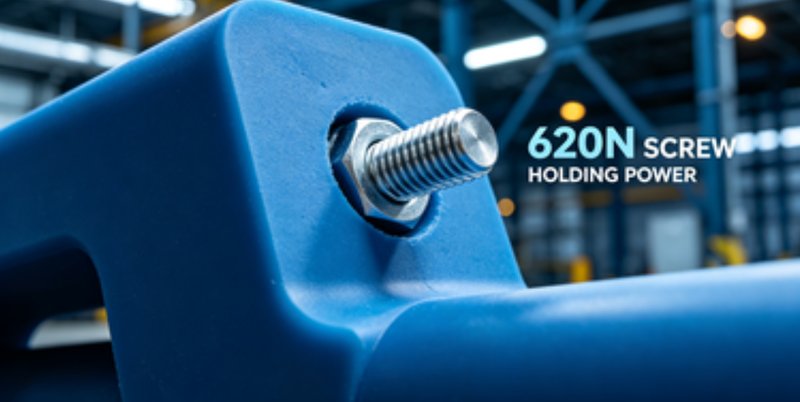
· 620 N screw holding power on the block face (exceeding the ≥600 N industry benchmark)
· 610 N screw holding power on the block edge (exceeding the ≥600 N industry benchmark)
This level of fastening performance matches that of high-grade engineered hardwood, while delivering the dimensional stability, material consistency, and extreme environment resistance that natural wood can never achieve. Supported by a complete set of certified mechanical and thermal performance indicators, Woqin HD-PUR solves the core contradiction of modular PAR pipe supports: balancing excellent cryogenic thermal insulation performance with reliable structural fastening and load-bearing capacity.
| Core Performance Indicator | Certified Test Result | Test Standard | Core Engineering Value for Modular PARs |
|---|---|---|---|
| Compressive Strength | 8.115 MPa | GB/T 8813 | Supports heavy static loads of large-bore LNG piping without cold creep |
| Flexural Strength | 8.17 MPa | GB/T 8812.2 | Resists hull torsion and impact loads without cracking or fragmentation |
| Shear Strength | 1.02 MPa | GB/T 10007 | Absorbs multi-directional shear forces during lifting and transit without structural damage |
| Thermal Conductivity (25℃) | 0.08 W/(m·K) | GB/T 10295 | Eliminates structural cold bridges and prevents cryogenic embrittlement of steel racks |
| Water Absorption Rate (24h Immersion) | 2.1% | GB/T 8810 | Resists moisture ingress and ice jacking failure in high-humidity marine environments |
| Combustion Performance | Class B1 (GB 8624), equivalent to Class B per ASTM E84 | GB 8624 | Meets the strict fire safety requirements of LNG projects and global HSE regulations |
| Density | 602 kg/m³ | GB/T 6343 | Delivers uniform structural stability across the entire block, with no internal weak points |
2.2 Full-Scene Pain Point Resolution: 620N Grip-Centric Performance Matrix to Eliminate Full-Link Risks
With the 620N screw holding power as the core, Woqin HD-PUR forms a complete performance matrix that directly addresses every pain point in the prefabrication, ocean transit, and on-site installation stages of modular PARs, completely eliminating the risk of prefabrication efficiency erosion.
2.2.1 Pre-Assembly Yard End: Hardwood-Like Machinability + Uniform Mechanical Properties to Improve Efficiency and Reduce Costs
Woqin HD-PUR completely solves the prefabrication bottlenecks caused by legacy materials, fully adapting to the assembly-line rhythm of modern modular yards:
· Simplified Installation Process, Improved Prefabrication Efficiency: With hardwood-like machinability and excellent toughness, Woqin HD-PUR can be cut, drilled, and milled with standard carbide-tipped tools in the prefabrication yard, without pre-drilling to avoid splitting, anti-corrosion impregnation curing, or additional metal limit cages. It allows engineers to use long-threaded bolts or screws to directly fix the pipe support to the steel beam in one step, significantly reducing single-unit installation labor hours and eliminating the scrap caused by material cracking during installation.
· Absolute Material Consistency, Eliminating Hidden Defects: As a homogeneous engineered polymer with a uniform internal structure, Woqin HD-PUR has batch-to-batch performance fluctuations controlled within ±2%. Unlike natural wood, there are no knots, grain differences, or hidden voids, and the 620N screw holding power is stable in every block. This eliminates the hidden prefabrication defects that only surface during transit, ensuring that every pipe support meets the verified design requirements before leaving the factory.
· Superior Dimensional Stability, Guaranteeing Prefabrication Precision: Woqin HD-PUR will not undergo water absorption expansion or drying shrinkage with changes in ambient humidity, and its linear thermal expansion coefficient is far lower than that of natural wood. It maintains dimensional stability that far exceeds that of natural wood, with negligible expansion or contraction under humidity changes in the prefabrication yard environment. This ensures that pre-aligned pipe supports perfectly match the steel rack dimensions when loaded for shipping, fully realizing the core "plug-and-play" promise of modular construction.
2.2.2 Ocean Transit End: Eliminate Displacement Beyond Design Tolerances with 620N Locking Force + Impact and Torsion Resistance
Woqin HD-PUR addresses the core failure risks of pipe supports during intercontinental ocean transit, fully preserving the prefabrication precision achieved in the yard:
620N Locking Force to Resist Vibration-Induced Loosening: The 620N screw holding power allows fasteners to remain firmly locked in the HD-PUR polymer matrix, even under 30-45 days of continuous multi-axis vibration and cyclic G-force impacts from ocean voyages. Unlike gravity or friction-based supports, there is no risk of slippage
· or loosening beyond design tolerances, ensuring that every pipe shoe remains within its CAD-specified position when the module arrives at the site.
· 8.17 MPa Flexural Strength to Resist Hull Torsion and Fragmentation: With a flexural strength of 8.17 MPa and uniform structural performance, Woqin HD-PUR effectively absorbs the torsional stress transmitted by hull hogging and sagging in heavy seas. Unlike brittle cellular glass or anisotropic wood that cracks along weak planes, it will not experience corner chipping, cracking, or loss of support capacity under asymmetric torsional loads.
· 1.02 MPa Shear Strength to Withstand Lifting Impact and Fastener Pull-Out: The 1.02 MPa shear strength and 620N screw holding power work together to resist the instantaneous impact loads of up to 1.8 times the static weight during multiple heavy lifts, per typical heavy-lift engineering practice. Unlike traditional supports with low fastening capacity, there is no risk of fastener pull-out, thread slippage, or separation from the steel beam, ensuring the structural integrity of the pipe support system through all loading, unloading, and transit processes.
· 2.1% Low Water Absorption to Prevent Premature Failure in Marine Environments: With a >95% closed-cell structure and 2.1% water absorption rate, Woqin HD-PUR effectively blocks moisture ingress in the high-salt spray, 100% relative humidity marine environment during transit. It will not become saturated with water before arrival, maintaining stable thermal insulation performance and eliminating the hidden danger of subsequent ice jacking failure.
2.2.3 On-Site Installation End: Plug-and-Play: Eliminating Field Rework, Hot Work, and Compliance Risks
By ensuring pipe supports remain within design tolerances during transit, Woqin HD-PUR completely eliminates the exponential on-site rework costs and compliance risks faced by EPCs:
· Eliminate On-Site Calibration and Rework Costs: Since every pipe support remains in its designed position after ocean transit, there is no need for on-site re-calibration, re-tightening, or limit welding. This completely eliminates the 12-15x higher rework costs of on-site rectification compared to factory prefabrication, and avoids the huge expenses of scaffolding, lifting equipment, and skilled labor in remote project sites.
· Avoid Hot Work and HSE Compliance Risks: With Woqin HD-PUR, there is no need for on-site hot work to fix displaced pipe supports, which eliminates the need to apply for multi-level hot work permits, shut down adjacent systems, or conduct continuous combustible gas detection. This not only greatly shortens the on-site commissioning cycle, but also completely avoids the HSE compliance risks and high regulatory fines associated with hot work in LNG project sites.
· Guarantee Pipeline Alignment and Project Acceptance: Woqin HD-PUR ensures that the pipeline elevation and coaxiality remain within the design tolerance, eliminating flange face mismatch caused by pipe support displacement. This avoids LNG leakage caused by uneven bolt stress after cryogenic cooldown, ensures that the pipeline system passes the ASME B31.3 pressure test at one time, and eliminates the risk of project acceptance failure and indefinite commissioning delays.
· Solve the Skilled Labor Shortage Dilemma: The plug-and-play feature of Woqin HD-PUR greatly reduces the demand for on-site skilled labor, fully offsetting the core pain point of skilled worker shortage in North America and other high-wage regions. It maximizes the core advantage of modular construction in reducing on-site man-hours, ensuring that the project is completed on schedule and within budget.
2.3 Long-Term Operational Reliability: 30-Year Design Life Stability Under Extreme Working Conditions
Beyond solving the full-link pain points of modular construction, Woqin HD-PUR delivers stable and reliable performance throughout the 30-year design life of the project, even under the extreme working conditions of LNG terminals in the Middle East deserts and North American coastal regions, eliminating the long-term operation and maintenance nightmare caused by legacy materials.
2.3.1 Resistance to Extreme Temperature Cycles and Long-Term Cold Creep
In the Middle East desert environment, where the day-night temperature difference exceeds 45°C, Woqin HD-PUR maintains stable structural performance under continuous high and low temperature cycles. With a compressive strength of 8.115 MPa and a highly cross-linked molecular structure, it exhibits negligible long-term creep under sustained static loads. It will not experience slow compression or pipe sagging like low-density PUR, nor will it undergo repeated expansion and shrinkage like wood, ensuring that fasteners remain locked and the pipeline elevation remains stable for decades, without the need for quarterly inspection and re-tightening.
2.3.2 Effective Resistance to Ice Jacking in High-Humidity Coastal Environments
For coastal LNG terminals in the Gulf of Mexico and the Persian Gulf, Woqin HD-PUR’s 2.1% low water absorption rate and >95% closed-cell structure physically block moisture and salt spray ingress. Unlike porous wood that becomes saturated with water, it will not experience internal ice expansion and splitting at -162°C cryogenic temperatures, effectively resisting the fatal ice jacking failure that plagues legacy materials. It maintains structural integrity and thermal insulation performance in high-humidity marine environments for a long time, avoiding the risk of pipe support rupture and replacement within the service life.
2.3.3 Fatigue Resistance Under Cyclic Loads
LNG pipelines undergo continuous alternating loads during cooldown, heating, and pigging cycles throughout their service life. Woqin HD-PUR’s balanced 8.115 MPa compressive strength and 8.17 MPa flexural strength give it excellent fatigue resistance, and it will not experience fatigue cracking or structural failure within the 30-year design life. Unlike wood supports that typically require replacement within 5-8 years in cryogenic service, it eliminates the need for frequent pipe support replacement, and avoids the massive production shutdown losses caused by replacement work in high-altitude, narrow spaces of modular pipe racks.
2.3.4 Stable Performance in Inaccessible Maintenance Blind Spots
A large number of pipe supports in large-scale LNG terminals are located in inaccessible parts such as the bottom of pipe racks, the gaps between multi-layer pipelines, and tank ring beams, which cannot be covered by daily inspection. Woqin HD-PUR’s biologically inert, non-rotting, non-corroding properties, combined with its long-term structural stability, ensure that it maintains reliable performance even in these maintenance blind spots for decades. It eliminates the major safety hazards caused by pipe support failure that is only discovered after flange leakage or pipe rack deformation occurs, achieving the industry-recognized design goal of "install and forget" for EPCs and terminal operators.
Part 3: From Engineering Certainty to Commercial Value – Reconstructing the Full Lifecycle Profit Model of Modular PAR Projects
Core Positioning: Value Closure & Conversion Driving | Target Audience: EPC Project Directors, Bidding Managers, O&M Decision-Makers | Content Proportion: 20%Writing Logic: Translate technical performance into tangible commercial benefits → address the core concerns of senior decision-makers (bidding competitiveness, compliance risks, ESG requirements) → eliminate procurement decision barriers with full-process support → close the loop with a clear, actionable call to action
Opening Transition Paragraph (Bridging Part 2 & Part 3)
The engineering performance of Woqin HD-PUR detailed in Part 2 does more than just solve the technical failure risks of modular PARs — it fundamentally rewrites the economic and compliance logic of large-scale modular construction projects. For global EPCs, the value of this material is ultimately reflected in four core dimensions: reduced full lifecycle costs, enhanced bidding competitiveness, mitigated compliance risks, and improved ESG performance. This section breaks down how Woqin HD-PUR delivers measurable, bottom-line value across the entire project lifecycle, from bidding to 30 years of operation.
3.1 Full Lifecycle Cost (LCC) Optimization: From "Frequent Replacement" to "One-Time Installation with 30-Year Scheduled Replacement-Free Design"
For EPCs, the core competitive advantage in large-scale LNG and petrochemical project bidding lies in a low, predictable full lifecycle cost model. Woqin HD-PUR directly addresses the cost overruns caused by legacy materials at every stage of the project, delivering quantifiable economic benefits:
Upfront Prefabrication Cost Reduction: The simplified one-step installation process of Woqin HD-PUR cuts single-unit installation labor hours significantly, eliminating material scrap during prefabrication that plagues legacy material options. This reduces the total prefabrication cost of the pipe support system by an estimated 25%, based on internal project benchmark comparisons, while compressing the prefabrication cycle to meet tight delivery schedules.
Delivery Phase Cost Elimination: By ensuring zero displacement beyond design tolerances during ocean transit, Woqin HD-PUR completely eliminates the 12–15x higher on-site rework costs compared to factory prefabrication, as well as the need for expensive on-site hot work, scaffolding, and skilled labor. More critically, it avoids the $500,000 to $1.2 million daily liquidated damages caused by commissioning delays, protecting the project’s budget and schedule baseline.
Long-Term O&M Cost Minimization: Unlike impregnated wood supports that require full replacement every 5–8 years in cryogenic service, Woqin HD-PUR is engineered for a 30-year design life with no scheduled replacement required. This eliminates the recurring costs of pipe support replacement, including production shutdown losses, crane rental, and labor costs associated with maintenance in high-altitude,
· hard-to-reach pipe rack areas. Over the 30-year lifecycle of a typical LNG terminal, this drastically reduces the total O&M cost of the pipe support system.
For EPC bidding teams, the 30-year low LCC model enabled by Woqin HD-PUR is a decisive competitive advantage. It directly addresses the core requirement of global project owners for predictable, long-term operating costs, significantly improving the winning probability of EPC bids for large-scale modular projects.
3.2 Compliance & Certification Advantages: A Performance System Aligned with Global Top-Tier EPC and Owner Specifications
One of the biggest hidden risks for EPCs in global projects is material non-compliance, which can lead to acceptance failure, mandatory rectification, and even loss of project qualification. Woqin HD-PUR’s fully certified performance system eliminates this risk, with every core indicator supported by third-party laboratory test reports, fully aligned with the most stringent global industry standards and owner specifications:
· Global Standard Alignment: The core mechanical and thermal performance of Woqin HD-PUR is tested in accordance with GB standards, with test methodologies aligned with equivalent ISO and ASTM procedures. This ensures the material meets the technical requirements of ASME B31.3 for cryogenic pipeline systems, OSHA regulations for North American projects, and ARAMCO (SAES) and ADNOC (AGES) corporate specifications for Middle Eastern energy projects.
· Fire Safety Compliance: The Class B1 (GB 8624) combustion performance of Woqin HD-PUR, equivalent to Class B per ASTM E84, meets the strict fire safety requirements of LNG terminals and petrochemical plants, eliminating HSE compliance risks associated with on-site installation and long-term operation.
· Traceable Quality Assurance: Every batch of Woqin HD-PUR comes with a complete set of quality certificates and test reports, with fully traceable material performance data. This eliminates the material compliance barriers that often cause project acceptance delays, ensuring the project passes owner and third-party inspections on the first attempt, with no costly rectification work required.
3.3 ESG & Sustainable Value: Reducing Carbon Intensity to Meet Global Energy Project Regulatory Requirements
Global LNG and energy infrastructure projects are under increasing regulatory and stakeholder pressure to meet strict ESG (Environmental, Social, Governance) targets. Woqin HD-PUR delivers a proven carbonmitigation strategy that aligns with global ESG requirements, addressing both regulatory compliance and project financing needs:
· Direct Carbon Emission Reduction: The 0.08 W/(m·K) thermal conductivity of Woqin HD-PUR effectively eliminates structural cold bridges, reducing heat ingress into cryogenic pipelines and cutting Boil-Off Gas (BOG) generation. This directly reduces the electricity consumption of re-liquefaction systems, lowering the project’s Scope 2 carbon emissions. Every kilowatt-hour of electricity saved also reduces the facility’s overall carbon footprint, which is increasingly scrutinized under global climate regulations.
· Waste Reduction & Circularity: The 30-year design life of Woqin HD-PUR drastically reduces the solid waste generated by frequent pipe support replacement, compared to wood supports that are replaced 4–6 times over the same lifecycle. Its inert, non-toxic polymer matrix also eliminates the environmental risk of chemical leaching from treated wood supports in coastal and marine environments.
· Regulatory & Financing Alignment: The carbon reduction benefits of Woqin HD-PUR help project owners and EPCs meet the ESG disclosure requirements of the U.S. SEC, Middle Eastern sovereign wealth funds, and international financing institutions. It also contributes to the overall carbon footprint reduction of the project, aligning with the carbon footprint reduction expectations embedded in emerging global mechanisms such as the EU Carbon Border Adjustment Mechanism (CBAM).
3.4 End-to-End Technical & Supply Chain Support: From Sample Testing to Customized Engineering Solutions
For global EPCs, a high-performance material is only valuable if it is backed by reliable supply chain and technical support. Woqin provides full-process, end-to-end support tailored to the needs of modular PAR projects, eliminating all barriers to adoption:
Stable Global Supply Chain: Unlike natural wood supports, which are subject to international timber trade controls, climate-related supply fluctuations, and batch quality inconsistencies, Woqin’s HD-PUR is manufactured in a controlled factory environment with a stable, scalable production capacity. We ensure reliable on-time delivery to prefabrication yards across Asia, with consistent batch-to-batch performance that meets every project’s specification requirements.
Customized Engineering Support: Our in-house cryogenic engineering team provides tailored support for every project, including: modular PAR stability analysis, load-bearing capacity calculations, thermodynamic ROI simulations based on project-specific parameters, and on-site installation guidance. We work directly with
· EPC design teams to optimize pipe support designs for modular construction, maximizing the efficiency and cost benefits of Woqin HD-PUR.
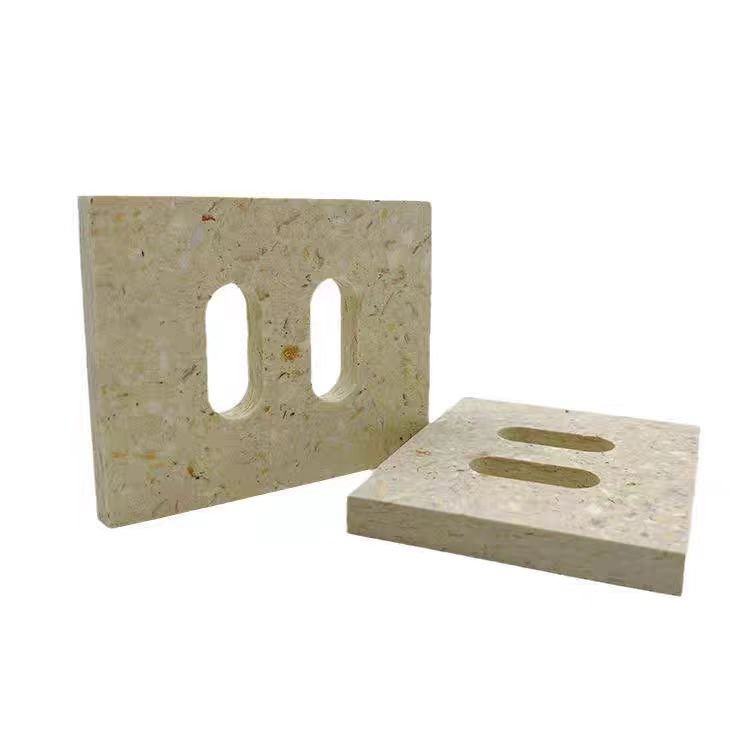
· Test & Verification Support: We provide free physical HD-PUR sample blocks for EPCs and prefabrication yards to conduct internal screw pull testing, mechanical performance verification, and thermal conductivity testing. Full technical dossiers, including third-party test reports, material specification sheets, and installation guidelines, are available upon request to support design, bidding, and project approval processes.
Clear Call to Action (CTA): Secure Your Modular PAR Project’s Stability & Profitability Today
Don’t let pipe support failures erode your modular construction efficiency gains, trigger costly rework, or put your project’s schedule and budget at risk.
Contact Hebei Woqin's dedicated modular construction engineering desk today to:
1. Request a complete technical dossier and third-party test reports for Woqin HD-PUR
3. Order a physical sample block for your internal screw pull and performance verification testing
Multi-Channel Contact Points
Email (Technical Desk): an@cn-aerogel.com
Official Website: insulatewool.com
WhatsApp Business: +86 13933929092
Related Engineering Solutions
· [Cryogenic Pipe Shoes in LNG Terminals: Replacing Wood with 8 MPa High-Density PUR]
· [Stopping BOG in LNG Piping: The Role of HD-PUR Structural Thermal Breaks]
· [LNG Tank Ring Beams: 10,000-Ton+ Load Bearing with 8 MPa Structural HD-PUR]
Full Article Conclusion
The modular construction revolution demands materials engineered for its unique challenges. Legacy solutions like impregnated wood, low-density PUR, and cellular glass were designed for a different era—they cannot
meet the full-lifecycle demands of modern PAR projects. Hebei Woqin's HD-PUR, anchored by its industry-leading 620N screw holding power, closes this gap with an engineered solution that preserves prefabrication precision across oceans, eliminates field rework, and delivers a 30-year maintenance-free design life.
For global EPCs seeking to protect their project margins, reduce schedule risks, and win more bids in the competitive energy infrastructure market, the path forward is clear: specify the structural fastening node, not the passive spacer.
Written by - Ruibin An
Industry Veteran with 13+ Years of Experience. Deeply rooted in the insulation industry for over 13 years, specializing in supply chain optimization and global market trends for Rock Wool and Aerogel materials.
LATEST NEWS
Stop the $18M Steam Pipe Burst: Dual-Defense Insulation That Survives C5-M
2026-06-04
Desert Node Armor: Crush-Resistant Pipe Shells for Cross-Country Pipelines
2026-06-03
Desert Sandstorms: The Hidden Killer of Amine Line Stability in Gas Processing
2026-06-02
The Desert’s Billion-Dollar Blockage: How Smart Insulation Ends Wax Deposition Nightmares
2026-06-01
Securing Flare Gas Networks: A1 Non-Combustible Shells for Extreme Heat
2026-05-30