
Engineering Resilience: Advanced Passive Fire Protection for High-Consequence Tank Farms
In high-consequence petrochemical environments, a localized thermal event can quickly escalate into a cascading failure. Traditional passive fire protection (PFP) systems often fail prematurely due to concussive overpressure, extreme heat flux, and firewater thermal shock. This technical review examines how upgrading to high-purity, 44 kPa tensile-strength ceramic fiber blankets (Class A1) provides a shock-absorbing, zero-curing "dry-wrap" solution. By mitigating BLEVE risks and ensuring ESD valve integrity, this system offers superior asset protection while drastically reducing facility upgrade timelines.
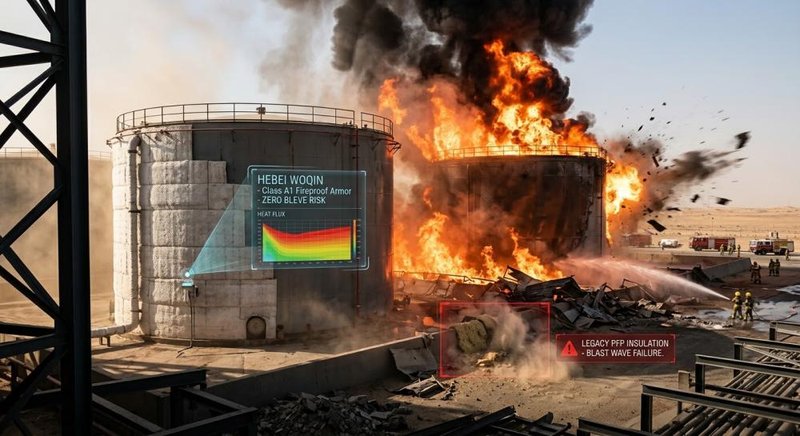
Engineering Resilience: Advanced Passive Fire Protection for High-Consequence Tank Farms
The modern petrochemical landscape—particularly in critical energy hubs like the Middle East—operates under increasingly demanding risk parameters. For large-scale crude oil and LNG tank farms, safety engineering has shifted from basic fire suppression to comprehensive Asset Integrity Management.
When a high-consequence industrial event occurs, the primary objective of Passive Fire Protection (PFP) is not extinguishing the fire, but preventing Cascading Thermal Failures (often referred to as the Domino Effect). Unfortunately, field data indicates that legacy PFP materials—such as rigid calcium silicate, cellular glass, and traditional intumescent epoxy—frequently suffer from premature physical degradation before their thermal limits are even reached.
To secure critical energy infrastructure, safety engineers must transition to materials that offer true mechanical and thermodynamic resilience. Here is an engineering breakdown of how Hebei Woqin’s High-Purity Alumina-Silicate Ceramic Fiber System neutralizes the five primary failure modes in tank farm fire management.
1. Concussive Overpressure & The 44 kPa Shock-Absorbing Matrix
In a major industrial incident, an initial vapor cloud explosion generates a high-velocity concussive shockwave. Traditional rigid PFP panels are inherently brittle; they often crack, spall, or detach completely upon impact. If the PFP layer is compromised by overpressure, the underlying steel substrate is immediately exposed to the subsequent hydrocarbon pool fire.
Resilience requires kinetic energy absorption. Hebei Woqin’s double-needled ceramic fiber blankets function as a flexible, shock-absorbing matrix. Verified by rigorous laboratory testing, our blankets deliver an exceptional Tensile Strength of 44 kPa. This structural elasticity allows the fibrous network to dissipate concussive energy without mechanical fracture, ensuring the fire barrier remains firmly secured to the tank shell even after a severe blast wave.
2. Heat Flux Management and BLEVE Prevention
When a primary tank is engulfed, adjacent pressure vessels are subjected to massive radiant heat flux. If the adjacent tank's insulation cannot impede this thermal transfer, the stored liquid will rapidly boil, causing internal pressure to exceed the vessel's structural limits, culminating in a catastrophic BLEVE (Boiling Liquid Expanding Vapor Explosion).
Mitigating BLEVE requires strict thermal resistance under extreme conditions. Hebei Woqin’s alumina-silicate system holds a certified Class A1 (Non-combustible) rating. Operating as a highly efficient thermal shield, it maintains an ultra-low thermal conductivity of just 0.134 W/(m·K) at 500°C. By drastically reducing the heat flux penetrating the tank wall, the system stabilizes the internal medium's temperature, granting emergency responders the critical 2 to 4-hour window required to deploy suppression tactics.
3. Firewater "Thermal Shock" & High-Purity Defense
During active fire suppression, automated monitors spray thousands of gallons of cold water and foam onto 1000°C steel surfaces. This rapid quenching induces extreme "Thermal Shock." Rigid insulation materials frequently shatter under this sudden contraction. Furthermore, standard rock wool—which relies on organic binders—often loses its structural integrity at high temperatures, leading to mechanical washout under high-pressure water jets.
Hebei Woqin engineered its ceramic fiber with an ultra-low Slag Ball Content of ≤11.6% (Φ>0.212mm). This exceptional purity translates to absolute Thermal Shock Immunity. Unaffected by sudden quenching, the fiber matrix retains its dimensional stability and physical grip on the substrate, preventing the PFP layer from being stripped away by aggressive firefighting operations.
4. ESD Valve Integrity & The -1.5% Seamless Seal
Emergency Shutdown (ESD) valves are the most critical isolation assets within a piping network. However, many flexible fire-jackets suffer from severe dimensional shrinkage during a hydrocarbon fire. As the material contracts, the seams around the valve flanges pull apart, allowing 1000°C flames to bypass the PFP, subsequently melting the pneumatic actuators and failing the valve in an open position.
Thermodynamic stability dictates survival. Our high-density (107 kg/m³) alumina-silicate material exhibits an exceptionally low Linear Shrinkage of just -1.5% (@ 800°C × 24h). Custom-fabricated PFP jackets utilizing this material maintain incredibly tight seams throughout the duration of a fire. Your ESD valves remain thermally isolated, fully functional, and capable of executing critical fuel shut-offs.
👉 [Discover how maintaining low shrinkage specs prevents fatal thermal gaps in 1260°C environments here.]
5. Installation Economics: Weather Dependency vs. Zero-Curing Dry Wrap
Beyond emergency performance, facility managers must evaluate the Total Cost of Ownership (TCO) and installation efficiency during plant upgrades. Intumescent epoxy coatings require extensive surface preparation (sandblasting) and multiple days of curing time. In regions like the Middle East, unpredictable sandstorms can contaminate uncured coatings, resulting in costly rework and extended facility downtime.
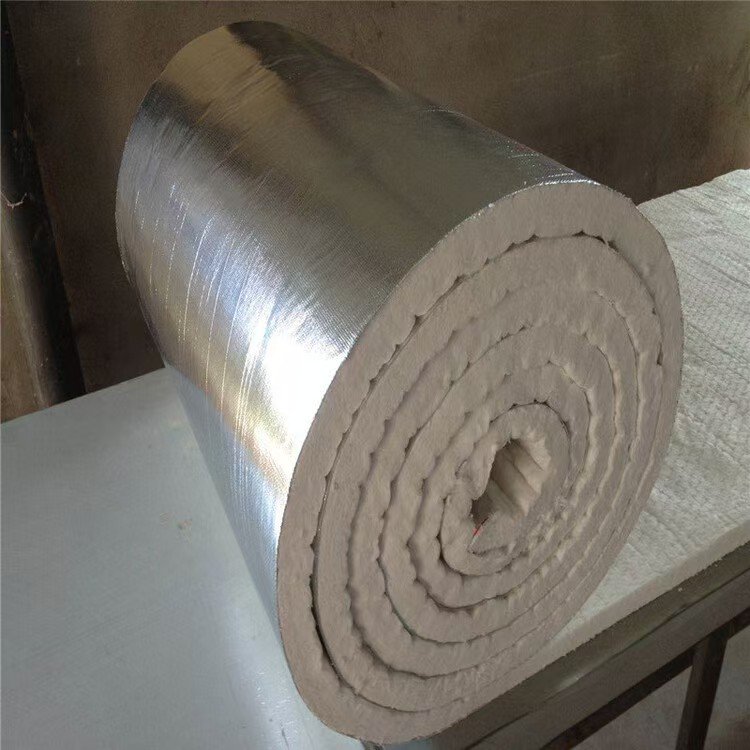
Hebei Woqin provides a highly efficient "Dry-Wrap" alternative. Our 107 kg/m³ density ceramic fiber blankets require zero curing time and eliminate weather-window dependencies. Installation can proceed regardless of ambient temperature or dust levels. Once banded to the substrate, the Class A1 fire protection is instantly active, significantly accelerating project timelines and reducing associated labor costs.
👉 [Are you also upgrading heavy-duty fired heaters? See our guide on 1260°C ceramic fiber for Middle East Cracking Furnaces.]
Redefining Asset Protection
In high-consequence industries, passive fire protection is a fundamental pillar of structural risk management. Facilities can no longer rely on legacy materials that fail under complex, multi-variable incident conditions.
Partner with Hebei Woqin to upgrade your energy infrastructure with verifiable, military-grade resilience. Contact our engineering team today for complete Technical Data Sheets (TDS), customized heat flux calculations, and factory-direct supply for your next facility turnaround.

Written by - Ruibin An
Industry Veteran with 13+ Years of Experience. Deeply rooted in the insulation industry for over 13 years, specializing in supply chain optimization and global market trends for Rock Wool and Aerogel materials.
LATEST NEWS
Cutting Pipeline Insulation Labor Costs by 40% in 50°C Middle East Heat
2026-06-18
Acoustic & Thermal Insulation for HVAC Piping in Middle East Luxury Hotels
2026-06-16
Calculated Oppression: How Thermal Drift and Structural Sagging Bleed Millions from Middle East Piping TCO (And the 20-Year Closed-Loop Solution)
2026-06-15
District Cooling in the Gulf: The Physics of Inevitable Condensation and How Pre-Formed Glass Wool Shells Stop It
2026-06-12
CCGT Power Plant Pipe Insulation English Marketing Copy (99-point Final Benchmark Version)
2026-06-10